This week, our lead article, Novel brain trauma treatments: our follow-up to The New York Times article, is in the Therapies Under Research category.

Also in this newsletter:
This week’s writers: Emily Sugg, Zoe Marquis, Malayka Gormally
Editors: Zoe Marquis and Malayka Gormally
Do you find the Concussion Update helpful? If so, forward this to a friend and suggest they subscribe.
Opportunities
Tuesday, November 24, 6 pm ET: A free webinar, Imaging in Concussion, presented by Dr. Andrea Para. Hosted by the Canadian Concussion Centre. Register here.
Tuesday, December 8, 6 pm ET: A free webinar, Concussion Mythology and Non-Evidence-Based Therapies, presented by Dr. Carmela Tartaglia. Hosted by the Canadian Concussion Centre. Register here.
Call for online youth and caregiver study participants: Researchers at the University of Maine are recruiting caregivers and youth ages 8 to 17, with or without a history of brain injury, to examine cognitive fatigue using an iPhone-based assessment. Participants will receive a $250 Amazon gift card. Contact: sophie.dean@maine.edu.
Call for study participants in the New York area, with $250 in compensation and transportation. Learn more here. Contact Jessica Peters at the Brain Health Imaging Institute at Weill Cornell Medicine at jep4007@med.cornell.edu or (646) 962-9037.
Call for online study participants who've had at least one concussion to complete a short survey on their thoughts and feelings about their concussion and recovery. Participants will be included in a $100 Amazon gift card drawing. Click here to take the survey by Penn State researchers.
Therapies Under Research
Novel brain trauma treatments: our follow-up to The New York Times article
A recent article in The New York Times discusses several novel treatments that may reduce the risk of CTE and, more broadly, may reduce neuroinflammation and neurodegeneration due to repeated brain trauma, whether it's from contact sports, Coast Guard high-speed boats, or intimate partner violence. Author Lynne Peeples discusses near-infrared light (photobiomodulation), gut microbiome interventions, vagus nerve stimulation, psychedelic therapy, and pharmaceutical medications. At Concussion Alliance, we’ve been writing about research on these potential treatments for years, and in this synopsis, we’ll provide an overview of the treatments, along with links to more information.
Photobiomodulation (near-infrared light therapy)
Peeples first discusses near-infrared light, also called photobiomodulation (PBM), noting that "Emerging science suggests that the [photobiomodulation] devices may help the brain be more resilient to damage." We wrote about this new research in our article, Light Therapy Promotes Neurological Resilience in College Football Players. Peeples also refers to a small study that found PBM "improved markers of early recovery for patients" with moderate TBI treated within one week of injury; read our blog post for more information. While very limited, there are a few small studies and a case study indicating PBM may help some people with persisting symptoms after concussion. To learn more, see our Light Therapy/Photobiomodulation resource, which includes how to access the devices. We also recommend The Atlantic’s article on PBM.
Psychedelics
The next topic Peeples covers is psychedelics, featuring former 2X Stanley Cup winner Daniel Carcillo, who found that psilocybin therapy relieved his symptoms that were "associated with CTE." See our resources on psychedelics and psilocybin as potential interventions, and read our article about Carcillo's licensed psilocybin service center in Portland, Oregon.
Microbiome interventions
Peeples discusses the microbiome, starting with a small study that "linked mild, non-concussive blows to the head during football with changes in the microbiome." Read our blog post to learn more about this study. A trial with findings "currently under review" suggests the microbiome might dictate recovery or be a target for interventions, according to Lisa Brenner, the trial investigator and director of the VA Brain Health Coordinating Center at the University of Colorado Anschutz. We highly recommend Dr. Brenner's webinar, The Gut-Brain Connection: Microbiome and Mental Health in Military Populations, which we highlighted in our Veterans Day Special Edition Newsletter.
Photobiomodulation and vagal nerve stimulation for the microbiome
These treatments may overlap: photobiomodulation and vagus nerve stimulation may influence the microbiome. Authors of a recent review article write, "The ability of PBM to influence the microbiome (if proven to be applicable to humans) will allow an additional therapeutic route to target multiple diseases." Peeples writes that vagus nerve stimulation may also benefit the microbiome. See our articles on vagus nerve stimulation. Our Photobiomodulation resource includes information on a PBM device that provides light therapy to the head and abdomen, and another device that provides transcranial PBM plus vagal nerve stimulation.
Pharmaceutical medications
Finally, The New York Times article discusses currently available pharmaceutical medications being studied for potential interventions. For example, Baricitinib, a "high-potency anti-inflammatory medication," is currently in a clinical trial to see if it "reduces depressive and cognitive symptoms in patients with depression who have played at least 11 years of organized tackle football." See Being Patient's explanation of the study. We've written about Laurel Schmidt's personal experiment with GLP-1s as a potential intervention (here and here); she announced a partnership with the Brain Inflammation Collective to create a case study. We have also written about Oxeia Biopharmaceuticals' research into OXE103.
CTE and Neurodegeneration
Uncovering CTE risk in former NFL players
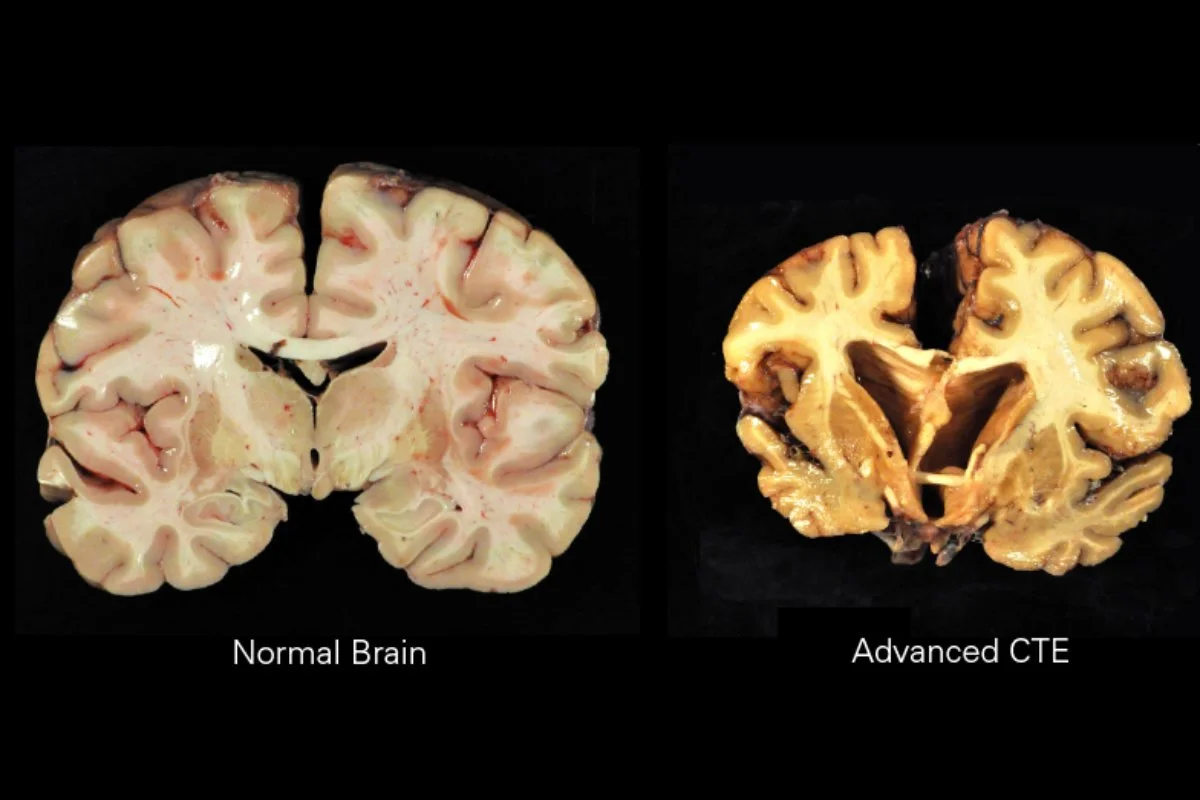
Image attribution: Boston University Center for the Study of Traumatic Encephalopathy, CC BY-SA 4.0, via Wikimedia Commons.
Julia Gallini and colleagues at Boston University's School of Public Health published a study in JAMA Network Open estimating that almost 75% of the 2362 former National Football League (NFL) players who died between 2008 and 2023 had chronic traumatic encephalopathy (CTE) neuropathology. CTE is a degenerative brain disease found in individuals who have sustained repeated blows to the head and can only be diagnosed after death. CTE is most prevalent in high-contact athletes, first responders, and the military, and is rare in the general population (about 1%).
While ~75% of this group had CTE neuropathology, a smaller subset, 27.2%, had been diagnosed with all-cause dementia during their lifetime. Helio author Shawn Arraj spoke with lead author Gallini, who "emphasized that the [CTE] prevalence estimates do not reflect the percentage of deceased NFL players who showed symptoms of CTE while alive…A portion of these players likely had no noticeable symptoms while they were alive, and another portion was likely experiencing only mild symptoms." This study builds on previous research estimating that at least 25% of former NFL players who died between 2016 and 2021 had CTE, as well as responses to that research.
A CBS News article added a caveat to the study. Dr. Kristen Dams-O'Connor, the director of the Brain Injury Research Center at Mount Sinai, said "the results of the paper 'cannot and should not be interpreted as being representative of current living athletes.'" In the last few years, the NFL has made rule changes to try to decrease the likelihood of concussions. Dr. O'Connor also noted that "the results could not be applied to the 'vast majority of people who played youth football' or other non-professional contact sports."
The study sample included 2,362 deceased NFL players, including brain donors (396) and non-donors (1,966). Out of the donors, the researchers found that 93.5% had CTE. To account for selection bias, the researchers calculated that individuals are 5 times more likely to arrange for brain donation if they experienced negative symptoms in their lifetime, resulting in the 74.5% prevalence estimate and a conservative lowest estimate of 63.7%
CTE is often thought to have a silent phase, with unidentifiable changes happening in the brain. However, Dr. Jay Alberts, director of the Cleveland Clinic Concussion Center, notes that some changes may be identifiable. He says that "what we need to do is listen more carefully and use better measurements to understand what those changes are." These measurements could include daily skills, such as driving and balancing a checkbook, that require both cognitive and motor skills. In other neurological diseases, these skills start to erode five to seven years before diagnosis, and CTE may be similar.
Ongoing studies are trying to identify biomarker changes associated with CTE. A study site at UT Health San Antonio is following current and past players and evaluating their brains and behaviors to identify any abnormal changes. In the last 10 to 20 years, there have been rapid advances in Alzheimer's therapies, and researchers are hoping to translate these findings to many other neurodegenerative diseases like CTE.
Culture
2026 Nobel Prize in Physiology or Medicine: Advances for Brain Health
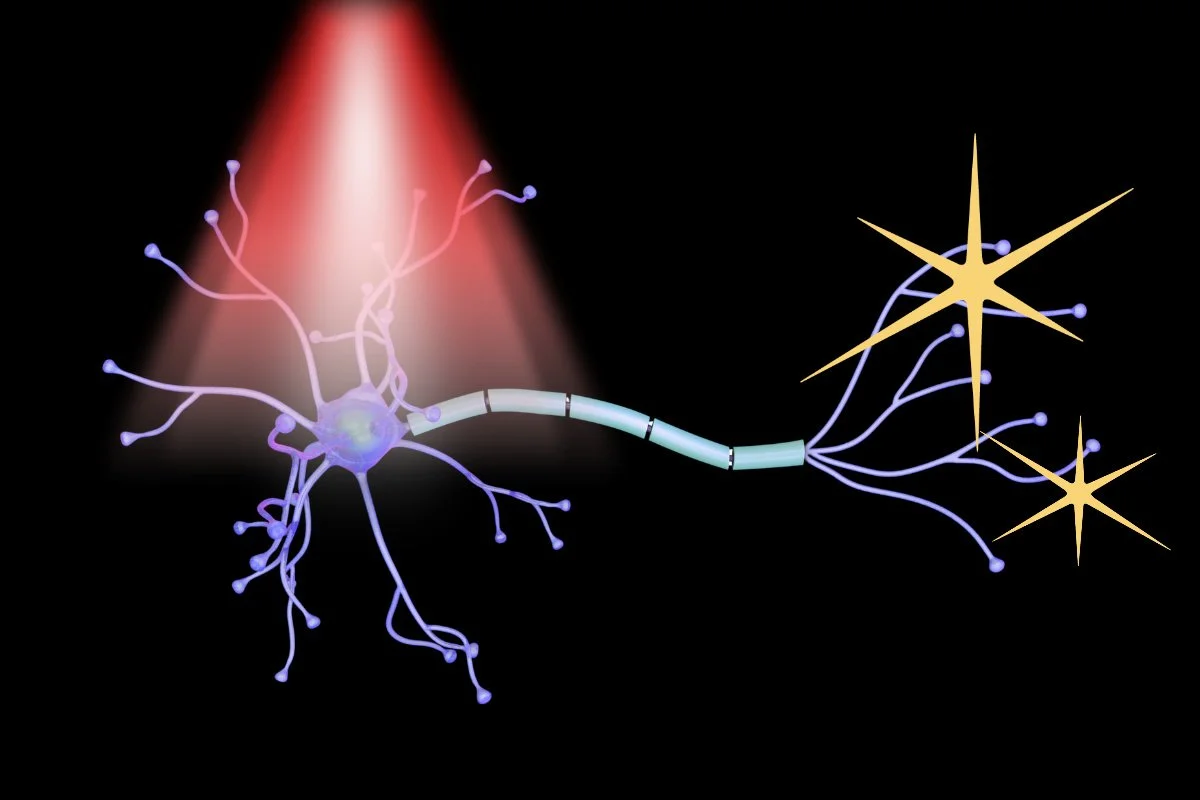
The 2026 Nobel Prize in Physiology or Medicine was awarded to Karl Deisseroth, Peter Hegemann, and Georg Nagel for discovering a light-sensitive protein that allows researchers to turn nerve cells on and off with specific frequencies of light. According to an article by Simon Spichak in Being Patient, this prize-winning discovery has led to the growth of the field of optogenetics, where research is shedding light on memory, emotions, and behavior. The technology is currently in clinical trials to treat vision loss, and researchers are working on ways to deliver the genes and light into the brain.
The light-sensitive protein is called channelrhodopsin and was originally found in a species of pond alga. Using gene editing, researchers can trigger channelrhodopsin to be produced in nerve cells. They can then control the nerve cell’s activity by exposing it to light. While previous tools allowed researchers to see which neurons were active during a behavior, optogenetics lets researchers turn certain nerve cells on or off and see how that affects the behavior. Viviana Gradinaru, a professor at Caltech who worked in Deisseroth’s lab as a PhD student, commented that optogenetics “lets us move from correlation to causation.”
Note from Zoe Marquis, Program and Operations Associate:
I used optogenetics in one of my undergraduate neuroscience labs. We used a specific light frequency to turn on a target neuron circuit, making fruit flies engage in courting behaviors. It’s fascinating to think back to my experience in the lab and realize that the same technology is now receiving the Nobel Prize and being tested as a treatment for vision loss. I will be interested to see other ways optogenetics might be applied to brain health.
What We’re Reading
Psilocybin as a treatment for repetitive mild head injury: evidence from neuroradiology and molecular biology | Communications Biology
Endocannabinoid-mediated rescue of somatosensory cortex activity, plasticity and related behaviors following an early-life concussion in male mice | Nature Communications
Differential sex-dependent responses of circulating steroid hormones and cortical gene expression in a traumatic brain injury model | Science Advances
Neuropathological and Behavioral Effects of Mild Traumatic Brain Injury at High Altitude | Journal of Neurotrauma
The glymphatic system clears amyloid beta and tau from brain to plasma in humans | National Library of Medicine
Study raises new questions about fish oil after concussions | Medical University of South Carolina
Investigating genetic susceptibility to concussion through rare variants in ion channel and neurotransmission genes | Journal of Neurology
Editorial: Visual rehabilitation of mild traumatic brain injuries or concussion | Frontiers in Neuroscience
You Can Support Concussion Patients


Join our community of monthly donors committed to improving how concussions are prevented, managed, and treated, thereby supporting long-term brain health for all. Learn more.
You can also make an impact with a one-time gift or tax-friendly options such as Donor Advised Funds (DAFs), IRA Charitable Rollovers, and Planned Giving: leave a gift in your will. Learn more.