
Laurel Schmidt on her experiment with GLP-1s for persisting symptoms after a concussion
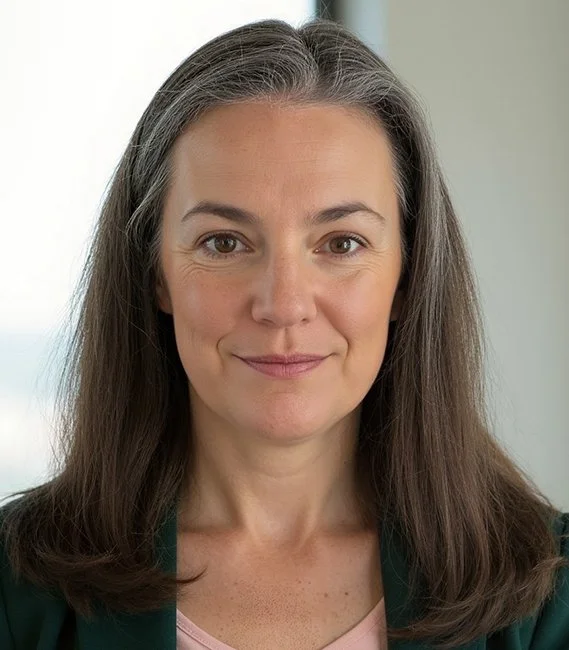
“Laurel Schmidt is an executive communications consultant whose clients have included Emmy Award-winning producers, New York Times bestselling authors, and university presidents. She is also a TBI survivor who, after nearly a decade of severe post-concussion syndrome, documented a 90% reduction in symptoms following off-label use of a GLP-1 medication — and is sharing her story to encourage formal scientific research into GLP-1s as a treatment for traumatic brain injury.” ~ Laurel Schmidt
Concussion Alliance covered the New York Times article by Julia Belluz, in which Laurel Schmidt was a featured patient, in our 4/16/26 Concussion Update Newsletter and in a related blog post. We received quite a few comments and inquiries from our readers about GLP-1s.
We were fortunate to connect with Laurel for this interview, in which Laurel talks with Concussion Alliance Co-founder and CEO, Malayka Gormally. Laurel tells her story, acknowledging that this is one woman’s experiment. This interview touches on many of our readers’ questions.
Laurel’s website, laurelschmidt.org, includes a chart of her symptom scores over time and some of the research studies that she shared with her doctor. Go to https://neurotoolkit.com/pcss/ to download the PCSS symptom test.
Concussion Alliance does not recommend specific treatments and strongly encourages patients to talk with their doctor.
About Laurel’s injury
“In November 2017, I was biking to pick up my daughters from day care when a car hit me. I flew headfirst over my handlebars, walked away with a bruised elbow, and went home with what felt like an ordinary headache.
Within days, the headache had become unbearable. I was diagnosed with a traumatic brain injury and severe post-concussion syndrome. I spent years dizzy, with impaired vision and a faltering memory. I stopped cooking because I was afraid I'd leave the stove on. I stopped driving because I couldn't process traffic lights quickly enough. Many days, I hid in a dark room and saw my children only briefly.” ~ laurelschmidt.org
Laurel’s experience with healthcare professionals
Malayka Gormally:
After your initial accident, what were you told? Why were you in a dark room? Were your physicians telling you that? Just walk me through your experience.
Laurel Schmidt:
Yeah. So I went to my family doctor after my accident. Initially, I went to an emergency room doctor, an urgent care clinic, and he told me, "Well, I'll write you an excuse for work for five days, and then you should be fine." And I remember thinking, okay, well, I'll spend two or three days recovering. And then I had all these errands I want to run with my extra time off. And after five days, I didn't feel better. In fact, I felt worse. And so I went to my GP, and she said, "Well, you should rest and rest your brain and stay off screens and stay in a dark room and give your brain time to recover." And I did that for a couple months. I did go see a neurologist in that timeframe, and the neurologist said, "If you still have bad headaches in a couple months, come see me, and I can write you a script for some pills for that, but otherwise there's nothing we can do."
And it actually took my mother-in-law, who is based in Madison, Wisconsin. She'd recently had a concussion, and she learned that I wasn't doing any rehab or anything to treat my concussion after a couple of months. And she said, "What are your doctors doing? There are therapies out there. Laurel should be doing them." And so I went to the concussion clinic that Providence had, and there I saw a doctor, a sports medicine doctor. And then, affiliated with that clinic, I got PT, OT, and speech therapy.
Malayka Gormally:
Okay. And then some vision therapy…
Laurel Schmidt:
Yeah, and some vision therapy through the OT, but it wasn't specialized. And so I did that for several months, and they identified a lot of problems with my vestibular system, with my visual system. That was the first time that I'd heard concussion being an energy crisis and that it was a metabolic crisis in my brain. That was from my speech therapist, who told me to eat a lot of carbohydrates because that was what my brain needed to run on. She was up on the science. I don't think she was the right person to be giving me advice on that exactly. And I later found that her advice was actually wrong, for my brain at least, when I found that a keto diet really helped my brain a lot. But that one is something that I discovered by accident.
So I did a lot of vision therapy after I did PT and OT, and then really focused on vision therapy because a lot of my problems were with vision. So I had convergence insufficiency, where my eyes couldn't focus together. I had a lot of tracking problems, so my eyes moved like sprinklers rather than smoothly across the visual field. And it was so pronounced that my husband could actually see it. Once the doctor pointed it out, he could watch my eyes, and he said, "Oh, that's so creepy."
Malayka Gormally:
So that was when you got to a neuro-optometrist.
Laurel Schmidt:
When I'd gotten to the neuro-optometrist, yeah.
And so I also had a lot of visual attention deficiencies. I wasn't able to drive for almost two years after my accident because I just felt so overwhelmed, and it would give me migraine-like symptoms, because my brain couldn't filter out what was important to focus on and what wasn't. And so, being in a car traveling at 25 miles an hour or 60 miles an hour, my brain just couldn't take in that much information and sort out what to ignore and what not to ignore. I realized I couldn't drive the day after my accident because I took my kids to a doctor's appointment, and I ran a red light, and at first I thought, "Oh my gosh, that light was timed so badly. They should do something about that." And then I realized... I realized my brain wasn't processing in time. And I think, like a lot of people, the first few days after my accident weren't actually that bad; my symptoms got worse as time went on.
So the first day or so after my accident, my symptoms weren't actually that bad, but they got worse over time. Over the next few weeks and months, I really, really got a lot worse. My accident happened in November of 2017, and 2018 was a really bad year. I think I counted 18 days without a debilitating headache. I could barely be outside of a dark room because I had such light sensitivity and noise sensitivity, and it was tough.
Malayka Gormally:
Let me ask you, who was telling you to be in a dark room? Because that advice had pretty much been ended with the 5th Consensus on Concussion in Sport, which was in 2017.
Laurel Schmidt:
So at that point, I just ran out of energy, and I couldn't, or I'd get migraine symptoms. And so to manage my energy, I would stay in a dark room because my light sensitivity was so challenging that even with the hat and glasses, I just couldn't manage being in light.
Laurel’s experience with the Keto diet
Malayka Gormally:
So then what happened?
Laurel Schmidt:
So in 2019, I happened upon Bulletproof Coffee, and I'm not a coffee drinker, and it was just very random, but I went to this coffee shop, and I ordered a Bulletproof coffee, and I felt the best I had in a year. And so I started Googling, "Bulletproof Coffee. Concussions." And it turned out that the founder of Bulletproof Coffee had had a concussion and was a big believer in the keto diet for concussion symptom management. And so right then and there, I decided to do it because I just felt so much better. And I saw a dramatic increase or a dramatic improvement in my symptoms pretty quickly after going on the keto diet.
And so I'd required prism glasses in order to help my eyes work together. And so I'd just seen my neuro-optometrist in November and got a new prescription for prism glasses to help my eyes work together.
And then I went on the keto diet, and I think I saw my neuro-optometrist again in March because I said, "You know what? These glasses aren't right. I don't think I need them anymore." And he reran all the tests, and I'd had such an improvement in my symptoms that he said, "Yeah." I still had a lot of light sensitivity, but it was a huge jump in my eye functioning in terms of all of the things that I'd had trouble with.
And so I looked into it more, because I always get curious about the science, and the keto diet was developed as a way to treat inflammation in the brain for kids with seizures about a hundred years ago, and they don't really understand all the mechanisms of why it works, but they do understand that it has an anti-inflammatory effect in the brain. And so I think that that's what was helping me with my concussion symptoms. So I stayed on the keto... A keto diet is hard to manage. It's really strict, and I know it doesn't work for everyone, but it did work for me.
And I stayed on that for about two years, actually, and I saw improvements, but I still wasn't back to normal. I still had a lot of light sensitivity. I still had a lot of vestibular issues. I still couldn't run. I couldn't do a lot of the things that I had done post-concussion. I couldn't do a lot of things I'd done pre-concussion. And I still had to really manage my energy really carefully and really be thoughtful about how and where I spent my time so that I could make it through the days without getting debilitating migraines.
Laurel’s research into GLP-1s
And so in early 2025, a friend suggested that I look into GLP-1s for inflammation, because she had been doing some research on it for her dad, who'd had a stroke, and she'd seen some preliminary research about GLP-1s and their effect on the brain and inflammation. So I started Googling, and I was surprised to find almost a dozen studies, preclinical studies, ones that had just been conducted on mice and cells, on GLP-1s and brain injury. And so it was really exciting to me that there was actual research behind this, and it wasn't just this general vague idea of inflammation.
Malayka Gormally:
The New York Times article mentioned a 2016 study and a 2014 review article, and that review article probably covered some of those additional studies that you were talking about.
Laurel Schmidt:
Yeah.
Malayka Gormally:
And they were all with mice.
Laurel Schmidt:
Yeah.
Laurel Schmidt:
So anyway, I decided I love science, and I really have a lot of respect for the scientific process and for research. And so I wanted to see if there was any research I could be a part of around GLP-1s. So I reached out to all of the researchers who were named on the studies who were based in the United States. I tracked them down via their academic emails and said, "Are you aware of any clinical studies happening on humans with GLP-1s and brain injuries? Because I would love to take part." And I was actually surprised that a number of them wrote back, and they said, "No, but good luck."
The start of Laurel’s GLP-1 experiment
And one, Professor Richard DiMarchi from Indiana University wrote back with more detail, and he was really kind, and he said, "Here's the challenges to running these human trials, and here's the things that we don't know about GLP-1s and brain injury." But he said," On balance, if your doctor thinks it's okay, I would say that this holds promise for brain injuries." So I took that to my doctor along with all of the clinical research. And my doctor was great. He said, "I'm open to this. Let me just review all of this." And I was so grateful to him for being open to that kind of information. So he read the studies, and he read my correspondence with Professor DiMarchi. And then he came back, and he said," Yeah, let's do this."
And so we decided together, he said, "Well, what do you think about dosing?" I said, "I have no idea." And so at the time I had a BMI of 27, so I was mildly overweight, and I also had slightly high cholesterol. And so my doctor said, "Well, let's just treat you as if I were treating you for obesity. Let's dose you as if you were trying to lose weight." And I said, "Sure, great." So I started on the lowest dose for the first month, just like they do if you're doing weight loss. And then I went up one step to the starting actual dose, and that's where I've stayed for the last year. And so I did see an immediate drop in my symptoms, but I had been having a pretty tough time when I went on the drugs, and so I don't know if that initial drop was... Oh, sorry, I skipped a step.
Laurel’s documentation of her experiment
So I decided that since there weren’t studies being done, and that I wanted to really document this really carefully for my doctor, so that I could really tell him. I feel like one of the hard parts about concussion is the question of, how much are you suffering and what is your suffering? And throughout my time, I'm a pretty optimistic person, and so people would say, "Well, how are you?" And I'd say, "Oh, I'm doing well," when I was a mess. And so I decided that I wanted to really document it in a way that people could understand what I was going through. And so I had taken the PCSS, the Post-Concussion Symptom Scale test before, the one that measures your scores, and it's been clinically validated, even though it's a subjective test, to really correlate with outcomes for concussions. And so they ask you, I think it's 22 questions, and you score your symptom severity on a scale of one to seven.
And so I think the scale goes from something like zero to 122 or something like that. And so in the first months following my accident, I scored in the 80s. And they say that if you score in the high 30s or above in the acute phase, it's a really good predictor of whether you're going to have persistent symptoms in post-concussion syndrome. So if high 30s is bad, I was in the 80s when the accident happened. And when I decided to take this test, or when I decided to start tracking my symptoms and start on the GLP-1s, I was scoring in the high 50s still.
Malayka Gormally:
Can I stop you there? So you self-administered the test, you found the test yourself, and gave it to yourself?
Laurel Schmidt:
Yeah. Yeah.
Malayka Gormally:
And when you first had the injury, was that your doctor giving you that test?
Laurel Schmidt:
Yeah. My doctor gave me the test.
So I found that test online, and I can share the link with you, but it was something where I could self-administer the test online, and then I printed it out as a PDF so that I could save all the records every single week as I did this self-experiment.
Medication type and dosing that Laurel’s doctor prescribed
Malayka Gormally:
Okay. I saw that he put you on Zepbound, which Eli Lilly created and was FDA approved in 2023, and it's a dual GIP/GLP-1 Receptor Agonist?
Laurel Schmidt:
Yeah.
It's a twincretin. And so the mouse research had shown that these dual agonist GLPs were more effective in treating mice with brain injuries. And so I went to my doctor and said, "This is what I want because this was better for the mice."
Malayka Gormally:
Okay..
Laurel Schmidt:
But it was based on the science that the dual action was more effective in treating the mice with TBIs. And so I decided that Zepbound was the one that I wanted to try.
Malayka Gormally:
Yeah. And he decided he was treating you for obesity, although technically being a BMI of 27 is just mildly overweight, but...
Laurel Schmidt:
So he wasn't treating me for obesity, but Eli Lilly's treatment guidelines do have a category for people who are mildly overweight but have a second category of symptoms, whether that's high blood pressure or high cholesterol, and so he decided to treat me under that protocol.
Malayka Gormally:
I see, because you were mildly overweight and had high cholesterol.
Laurel Schmidt:
And had high cholesterol.
Malayka Gormally:
So he followed the dosing recommendations for that.
Laurel Schmidt:
Yeah, exactly.
Malayka Gormally:
And so you started low, which is the part of the dosing thing, and then the next month you went up?
Laurel Schmidt:
Yes, exactly. As if I were doing it for weight loss.
GLP-1 muscle loss issue
Malayka Gormally:
Some of our readers have written in and said, there's a lot of concern about muscle loss right now. It's interesting: the New York Times just in the last day or two came out with an article about muscle loss, saying that the muscle loss issue with GLP-1s might be much more nuanced.
Laurel Schmidt:
Yeah.
Malayka Gormally:
Nevertheless, particularly in older and frail populations, muscle loss may be of particular concern, according to the New York Times article. And so there was some question of how that issue of muscle loss intersects with someone with post-concussion syndrome (PCS)... It's now called persisting symptoms after concussion, rather than concussion syndrome. And that's because the definition of a syndrome is that everybody has the same group of symptoms in every case. And as you know, every person with persisting symptoms after a concussion has different groups of symptoms.
So one of our Concussion Update Newsletter readers was asking whether, with someone with PCS or persisting symptoms after concussion, and especially if you have dizziness, could the potential muscle loss be a problem? I do wonder, also, if you're supposed to do resistance training while you're on GLP-1s, is resistance training possible if you have symptoms of dizziness or other things that make it harder to work out? I'm just wondering how you navigate that.
Laurel Schmidt:
Well, I can only share my experience, but GLP-1s have enabled me to exercise again, and they've really given me my life back. So I was an endurance athlete before the injury, but one of the most frustrating symptoms of my concussion was that I couldn't exercise. I had exercise intolerance. And so if I did even just a little bit too much, I would end up with a migraine for 24 hours. So I had to be so careful about how much I exercised. And I also did have a lot of vestibular issues. And so they always say weight training is so good for you. And so I would try various exercises, and especially things like squats were so challenging for my vestibular system, but so many different things about weightlifting were challenging to my vestibular system because you're moving through space, and it would just be so much for my brain to integrate with my eyes.
And so with the GLP-1s, I've actually been able to return to exercising in a way that's been really, really meaningful to me. And so I can now do resistance training because I don't have the vestibular symptoms that I had before. I've also been able to return to running, which has been huge for me. I was a marathon runner and did an ultramarathon, and it was such a huge loss in my life when I wasn't able to run because of the concussion, and the GLP-1s have made that possible again. So I just did a trail 10K in February with friends, and I ran a 10K with friends in January, and I was able to do a turkey trot with my family in November. It's just been really, really amazing for me, the difference that it's made.
Malayka Gormally:
Wow. Wow. So the GLP-1s helped with your vestibular issues?
Laurel Schmidt:
Oh yeah. And my light sensitivity. Yeah.
How long does Laurel anticipate being on Zepbound? She describes her symptoms before and after starting the medication
Malayka Gormally:
So tell me, maybe go through your symptoms, where they were each symptom before you started the GLP-1s, and where they are now. And I'm assuming you're still on the GLP-1s (Zepbound).
Laurel Schmidt:
I am still on them. And that's another question that I always get, but I can walk you through why I understand that the GLP-1s were addressing my symptoms.
So I think that one of the major... The way that they describe concussion now is an energy crisis. And so your brain both needs a ton of energy to be repairing itself, but it also isn't able to generate the energy that it needs, and it isn't able to efficiently take up the energy that it needs because of all of the inflammation that's happened in the brain. And so GLP-1s are actually known to help with insulin management and energy management in the brain. And so I think that that kind of brain energy issue has helped me a lot. The other thing that GLP-1s are known to help, within the mouse and cell studies, is inflammation, and that causes a lot of the problems with your visual system because your brain is just having to reroute things inefficiently, and your vestibular system in your eyes is so sensitive that if everything is not working correctly because of the inflammation, then you have those problems.
And then the other issue is just if there is actual damage to your brain, neurons, and stuff like that, they've shown in cell studies that GLP-1s can be protective of that kind of damage. And so it's really an exciting drug because these preclinical studies at least show that it could really address concussions on such a variety of levels. And so for me, I had a lot of vestibular issues, and I had a lot of visual issues, and I also just had a lot of energy issues. I'd get really tired out, and I had to be so careful with my energy management. And the GLP-1s have resolved all of that.
Malayka Gormally:
Wow. Including things you would not expect at all, like dizziness or vestibular issues. I just did not expect that.
Laurel Schmidt:
Yeah. I go outside now without a hat and glasses, which I just can't tell you what a difference that is. It used to be that being in the sunlight was like standing in front of a leaf blower and having someone blowing it at top volume and top speed in my face. And now I can go outside without a hat and glasses.
Malayka Gormally:
Wow. And so, where are you with your PCSS score? When was the last time you took the concussion test?
Laurel Schmidt:
Yeah. So I scored at a six, which, if you just presented at the doctor's office and didn't have a precipitating incident, they would say you probably didn't have a concussion.
Malayka Gormally:
Right. Wow. And have you seen your neuro-optometrist recently?
Laurel Schmidt:
No, I haven't. I've meant to circle back to them, and I shared some of my results with some of my doctors, but I haven't circled back to them yet.
Malayka Gormally:
So what are your thoughts about staying on the GLP-1s?
Laurel Schmidt:
So I really want there to be more research into this, and I want scientists, and I want people who really understand this to be weighing in and advising, because I don't know. I mean, you know probably more about the biology of persistent symptoms of concussion, but I think there's a question of whether or not in terms of inflammation, whether or not my brain got turned on to be inflamed, and whether or not that is something that just now is going to persist unless I'm on the drugs or if going on the drugs broke the cycle and now my brain could be fine without the drugs. That's really a question that I think the science isn't clear on.
And so I've continued to see small improvements in my brain. And the other thing is, I feel like I'm actively rewiring my brain. I mean, when you spend seven years being so careful and thoughtful and worried about going outside, and worried about doing this and doing that, there's a certain level where, even if neurochemically my brain is ready for it, my conscious brain has to rewire. And so I do a lot of self-talk, like, "You're going to be okay. This is okay." And so I feel like I'm still rewiring in that way. And so my doctor has agreed to keep me on it for the foreseeable future because I do still feel like I'm having improvements.
How the New York Times came to feature Laurel’s story
Malayka Gormally:
And how did it come about that the New York Times wrote about you? I mean, the tagline in the article was something about GLP-1s may help with a wider range of issues than originally thought, but I was not expecting that the first paragraphs were going to be about someone with persisting symptoms after a concussion. It was completely unexpected.
Laurel Schmidt:
Yeah. So they put out a call for submissions, which they sometimes do on a variety of topics. And they said, "If you're using GLP-1s for novel uses, we want to hear from you." So my husband saw that, and he texted it to me. He's like, "Oh, you should fill it out." And I actually have a background in communications, and I used to do pitching reporters and stuff like that, but this was just like a total whim of like, "Oh, sure." So I filled it out, and then a few days later, I heard back from the reporter, and she wanted to interview me. And when I heard from her, I actually had more questions for her initially than she did for me right at the start because I said, "Have you heard from anyone else who has a concussion who's using it in this way?" Because when I first started thinking about this, I didn't even Google GLP-1s and concussions, thinking that there would be clinical research.
My first search was whether anyone on Reddit had been doing it, because I figured that there just wasn't research on it, and the only thing I could find on Reddit at the time I searched was someone who had been on GLP-1s and then gotten a concussion, and they blamed the GLP-1s for the concussion. So I was really operating in the dark. So when the reporter contacted me, she said, "We've heard from hundreds of people." And I said, "Is anyone else doing this?" Because I know that one story, while mine is a really compelling story, is an anecdote. And if we're going to really document this, then people want to know that it can help more than just one person in their one particular scenario. So I was really hopeful that actually I wasn't the only one and that she had found a bunch of other people who'd done it, but I was the only one.
And I actually read all 857 comments on the New York Times piece because I was also curious if anyone else would surface. And in the 857 comments, there was one other person who said that they had gone on GLP-1s to treat obesity, but they had lingering concussion symptoms, and they had noticed an improvement in their concussion symptoms, and they felt really validated by reading about my experience because they thought, “Oh, this actually might be something that happened rather than just a coincidence.”
Laurel’s hope for research into GLP-1s for concussion
Malayka Gormally:
Have you had any researchers reach out to you since the article in The New York Times?
Laurel Schmidt:
No. Professor DiMarchi has been really kind, and I've continued to be in contact with him, and he's been really lovely. And so he has connected me with folks at Eli Lilly and Novo Nordisk who direct their clinical research, but they weren't very interested because it's just one story. And so I have heard from a lot of people who are curious and want to know more about my experience, who are experiencing symptoms similar to mine. And so I'm not a doctor, and I encourage everyone to talk to their doctor and get their doctor's advice, but I've been sharing the research that I shared with my doctor, and I've also been asking people if they can document their self-experiment with it as well by tracking their symptoms.
I mean, ideally, it would be amazing if we could have a real researcher doing panels and measuring inflammation in people's brains and doing all that stuff. But for now, since we don't have someone engaged like that, I'm just asking people to track their symptoms because I would love to bring that forward to someone and say, "We have this cohort, it's not just me."
Malayka Gormally:
Yeah, I can see that. It was an interesting issue; do we cover this story in our Concussion Update Newsletter? Because it is one person. Right? It's the same thing that you're talking about. It's like it's an amazing outcome that you've had, and yet it is one person. And is it fair to focus on something like this when so many people with persisting symptoms after a concussion are desperate?
Side effects from Zepbound
Malayka Gormally:
And we don't know if there are side effects that specifically intersect with this population. Maybe that's one thing to ask you at the moment. I mean, do you have side effects that are problematic that make you think twice about it?
Laurel Schmidt:
No. So I still take it weekly, and sometimes after my dose, I have mild GI [gastrointestinal] issues, but I think, like so many people, mild GI issues are nothing compared to what I was living with. And so I'm more than happy to put up with a day of mild discomfort.
Laurel’s life now
Malayka Gormally:
So what are you doing now? Are you able to get back to work and do what you want to do?
Laurel Schmidt:
Yeah. It's funny because I kept thinking I should circle back to Professor DiMarchi and let him know how I've done. And if it hadn't been for that New York Times thing, I don't know if I would because I was just so busy living my life. And so I was able to coach my daughter's volleyball team this winter, which was just amazing and something I could never have imagined doing.
Malayka Gormally:
I'm so glad for you.
Laurel Schmidt:
Yeah. So yeah, I've been very busy living my life.
Malayka Gormally:
As you should be.
Laurel Schmidt:
Thank you. But I think the other thing is that after seeing my story, I was really excited about seeing it. And then as soon as it came out, I felt like I have to do more. If I'm well, I really want to do more to help other people.
Malayka Gormally:
Yeah. I mean, the extent of the problem is so huge. I mean, there are 56 million people globally each year who get a concussion. And then the rates of persisting symptoms, depending on the study, are 10 to 30% of those people. There are other studies of people who were diagnosed with a concussion in the ER, and then, at one year, up to 50% of them have at least one persisting symptom. So you're talking about a lot of suffering, and if you want to talk economics, a lot of job loss.
Laurel Schmidt:
Yeah.
Malayka Gormally:
And we regularly talk to people who have been to five, six, or seven doctors. So it's an unfortunate use of the medical system, too, where people are spending all this on care, which is not really helping them.
Well, do you have any other things that you'd like people to know about this?
Calorie levels and drinking water
Laurel Schmidt:
I think I hit on the questions that people ask, which are normally about dosing and side effects, and then whether or not I expect to be on it for a long time. Those are the questions that I've gotten the most from people who've reached out. I think the one other piece that I tell people is that I think a lot of people worry about fatigue being on the medications because of it being at a low calorie level, and whether or not they'll feel bad because of that. And that's not something I've experienced, but one thing I would say to someone who is experimenting with these drugs with their doctor's oversight, of course, is to make sure to drink a lot of water because I've noticed that it takes away your desire to drink water. And so I have sometimes gotten dehydrated and then felt not good. And then I remember like, "Oh, I didn't drink water today."
Malayka Gormally:
Right. Drinking water, they're finding, is really important for the brain after a concussion.
Laurel Schmidt:
It's so important for the brain, and it's so important for your overall function. And so just being mindful of that kind of stuff.
Malayka Gormally:
I also wanted to ask you just about when you said reduced calories, so you weren't on a diet while you were on GLP-1s, it just prompted you to eat less. Is that what you meant about reduced calories?
Laurel Schmidt:
Yeah. I'm not on a diet at all, and I just eat healthfully and mindfully. And so I just noticed that I will have one serving of dinner, whereas in the past I might think, "Oh, that tasted really good. Maybe I'll have some more." I'm good with the serving.
Malayka Gormally:
Okay.
Persisting symptoms and mental health
Laurel Schmidt:
I think the other thing that I think is so important, too, as I've talked to people for concussion recovery, is I don't know that GLP-1s are going to be a silver bullet, and I don't know that they're going to be a silver bullet for everyone. And I do think that a lot of the treatments that I did before trying the GLP-1s were helpful. And specifically, I think that I addressed some of the emotional fallout of having a chronic illness, and I got support and counseling for that. I did EMDR for PTSD, and that was really, really effective. And I worry about people thinking that this would be a silver bullet and not addressing... I don't know if GLP-1s can address PTSD, and it's really, really hard to have a chronic illness.
And so I hope people would get support for that as well, rather than just thinking like, oh, well, I'll cure my symptoms, and I'll be fine. And the other thing I did was I developed a daily yoga and meditation practice. I did a course with Love Your Brain.
Malayka Gormally:
Oh, excellent. Yeah.
Laurel Schmidt:
Yeah. But I think that having that as part of my healing practice... And that's evolved through the years. I've had a daily practice for the last six years, and that's evolved, but I think that that's also been critical to my healing. And so I want people to hear that this might not be a silver bullet, but it might be a piece of the puzzle, and I hope that they find other treatments and ways to support their brain as well.
Malayka Gormally:
Yeah, that's a great wrap-up. So we always list Love Your Brain's courses in our Opportunities section in our newsletter and we're friends with their team. Did you do their mindset program? It's an online yoga and meditation.
Laurel Schmidt:
Yeah.
Malayka Gormally:
Yeah. Okay. And they're free. Yeah, they're excellent.
And mental health is a huge issue with concussion. If you have a mental health challenge before a concussion, it can make you more likely to have prolonged or more extensive symptoms. And you can also, after a concussion, develop new onset mental health issues.
Laurel Schmidt:
Yeah.
Malayka Gormally:
And yeah, the fact that you're living with an invisible injury where everybody's saying, "You look fine," and you're not, can cause mental health issues in and of itself. So I'm really glad you got the care for it.
Laurel Schmidt:
Yeah. And I know also, I always ate really healthfully and was really thoughtful about what I put into my body pre-injury and post-injury. And so I haven't experienced a giant shift of like, oh now... Because I think people worry or wonder, like, " Oh, what's this going to do? Can I no longer eat hamburgers?” But it's just been that I noticed that I'm eating less, but it's not a big deal.
Malayka Gormally:
Okay. Yeah. Thank you for telling the whole arc of the story. That really helps give context to it.
Additional thoughts from Laurel
Laurel had a few additional thoughts after we stopped recording, so we asked her to write out those thoughts, which are as follows:
Laurel Schmidt:
Almost every single therapy I tried, prior to GLP1s, came at a huge cost to me in terms of my energy. Oftentimes, I had to calculate
whether the long-term benefit would outweigh the short-term suffering and painful migraine I knew I would get. This is true whether it was a
session of vision therapy or even just a massage. For any treatment, I would very carefully schedule it so that I knew that I'd have enough downtime to recover, whether that was making sure my husband was available that day to pick up our kids, or blocking out an entire
morning to sleep after an appointment. The keto diet and then GLP-1s both addressed my symptoms without this huge energetic cost, which was really important for me.
I know that the keto diet was immensely helpful to me, but others with PSAC have tried it and not seen a huge benefit. Similarly, I assume that GLP-1s will not be able to help everyone. But if they are able to help even 30% of patients with PSAC, that would be an amazing
breakthrough for concussion treatment. As Julia Belluz's New York Times article said: "Dr. Daniel Drucker, a researcher based at
Toronto’s Lunenfeld-Tanenbaum Research Institute, whose GLP-1 discoveries helped lay the foundation for today’s drugs...Dr. Drucker said he gets emails almost every day from patients about how GLP-1s treated their addictions or caused miraculous turnarounds like Ms.
Schmidt’s. He doesn’t doubt that the cases are real. They’ve even spurred new research directions in his lab, such as studies focused on
arthritis. “The question I always have is, if I treated 100 people with concussion or 100 people with long Covid, would the response rate be
35 to 40 percent, in which case, wow, this is really useful as a medicine, or 3 percent?”