
Concussion Resources
This page is a review of Concussion Alliance resources for athletes, parents, concussion patients, and advocates. You can also locate all these resources from our main navigation menu.
Website Resources
We have over 55 website resources for patients and advocates, which are divided into several sections:
In About Concussions, we provide a broad range of information on concussions.
Our Treatments and Self-Care section covers medical and rehabilitative treatments, complementary and alternative treatments, and an overview of self-care.
In Affected Communities, we focus on different communities and populations and how concussions affect their lives specifically, plus specific resources for these communities.
The Find Providers section helps you find accredited providers in many different healthcare fields related to concussion
Read further for more information on all these resources.
About Concussions
In our About Concussions section, we provide a broad range of information about concussions; you can read about all these resources on the About Concussions Overview page. Here are examples of resources in this section:
–General information about concussions: What Happens to Your Brain When You Get a Concussion?
–Symptom-based resources: Sleep and Sleep Problems, Headaches, Cognitive Dysfunction, Mental Health, Persistent Symptoms After Concussion, and more.
–Resources that address social factors: The Invisible Injury, Care Disparities, and A Brief History of Concussion as a Public Health Issue.
–Resources on related conditions and long-term effects: PTSD and Neurodegenerative Diseases.
Treatments and Self-care

Our Treatments and Self-Care section is divided into five sections; you can read about all these resources on our Treatments and Self-Care Overview page. Here are examples of resources in each section:
–Recovery Guidelines: Immediate Care, Recovery Guide, Quick Guide: Navigating Your Recovery, and Recovery Guide: Children and Adolescents.
–Medical and Rehabilitative Treatments: Concussion and Rehabilitation Clinics, Physical Therapy, Vision Therapy, Medication, Cognitive Rehabilitation, Graduated Exercise Therapy, Occupational Therapy, and more.
–Learn About Different Kinds of Healthcare Providers: Physiatrists, Neurologists, Psychologists, Neuropsychologists.
–Complementary and Alternative Treatments: Acupuncture, Yoga and Meditation, Craniosacral Therapy, Massage Therapy, CBD/Cannabis (research info), Light Therapy (Photobiomodulation)
–Self-Care: We recommend you start with our Overview of Self-Care, which includes sections on Sleep, Nutrition, Exercise, Sensory Sensitivity, and Emotional Wellness.
Affected Communities

In our Affected Communities section, we focus on different communities and populations and how concussions affect their lives specifically, plus specific resources for these communities. You can read about all these resources on our Affected Communities Overview page. Here are the resources in this section:
College Students, Women and Girls, Service Members and Veterans, Pediatric (infants, toddlers, and children), Adolescents, Older Adults, Care Disparities for BIPOC and Females, Survivors of Intimate Partner Violence, Youth Sports Participants, Mental Health Among High Schoolers, Individuals with Pre-Existing Disability, and Workers and Work Places.
Find Providers

On our Find Providers page, we list healthcare providers by specialty and link to search tools provided by the accrediting organizations for each profession. We cover a wide range of medical and rehabilitative providers, complementary and alternative healthcare providers, and information on choosing a good concussion or outpatient rehabilitation clinic.
We include a description of how to use the search tools specific to each specialty and a link to our resource about the treatment or therapy.
We also have lists of providers for some states (US) and provinces.
Quick Guides for Patients and Advocates
The following Quick Guides are available for downloaded:
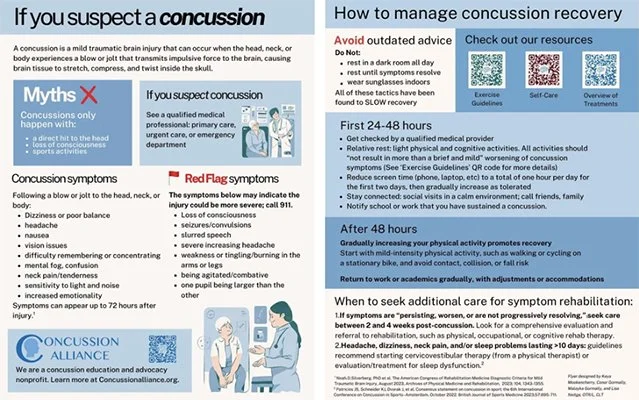
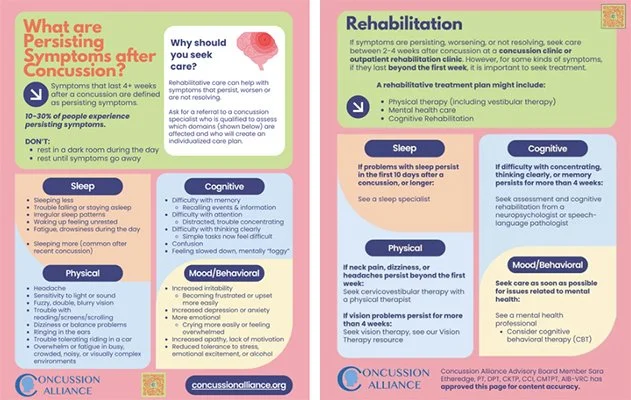
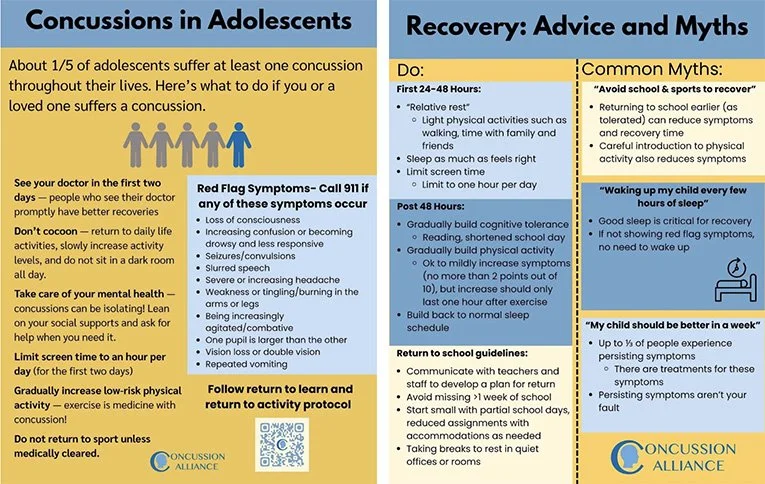
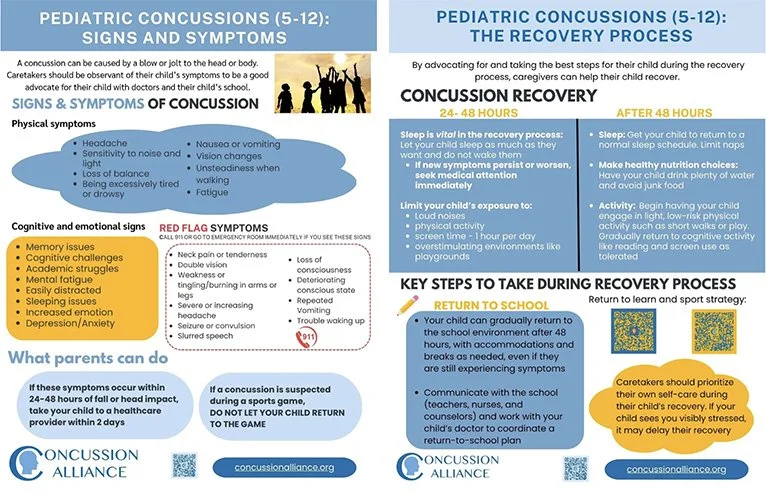
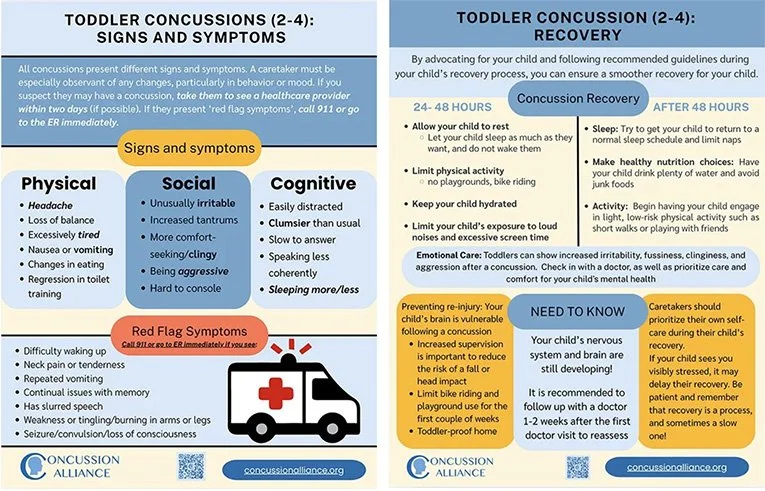
Navigating Your Concussion, Persisting Symptoms (PCS) Guide, Adolescent Concussions (Age 13–18 Years), Pediatric Concussion (Children Age 5–12 Years), Toddler Concussions (Age 2–5 Years), and Infant Concussions (Age 0–24 Months).

Video: Concussion Advocate Training Workshop
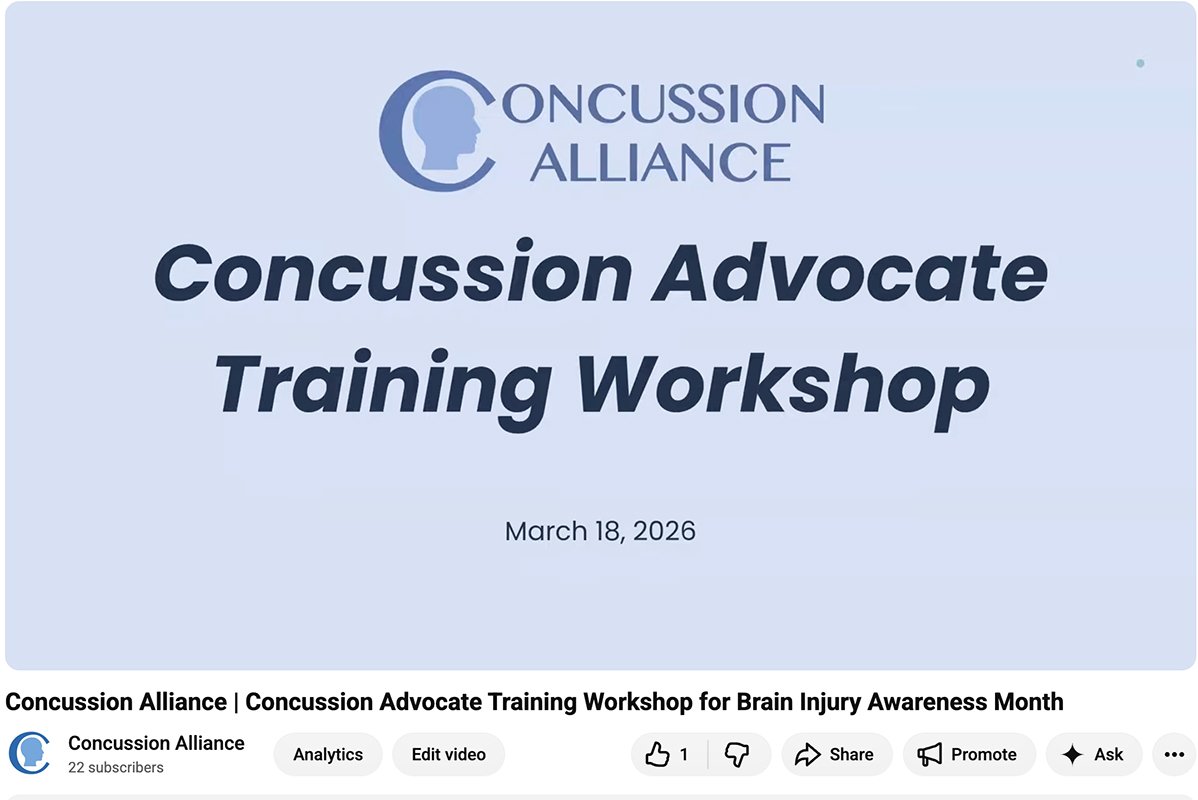
Concussion Alliance Co-Founder Conor Gormally presents our Concussion Advocate Training Workshop. In this 45-minute recording, Gormally lays out a comprehensive suite of education tips to help you become an informed and educated advocate for proper concussion care in your community. The webinar covers what a concussion is, how widespread concussions are, and what to know about each phase of recovery (the first 48 hours, days 3-7, weeks 2-4, and 4+ weeks out).
Return to School Protocol
The Return to School strategy below was developed by PedsConcussion and incorporates the most recent concussion guidelines. Scroll below this chart for instructions on how to implement this Return to School strategy.

Instructions for using the Return to School strategy
The instructions and definitions below are from Pedsconcussion.
"Students should begin a gradual increase in their cognitive load with the goal of minimizing time away from the school environment. The return to school should not be restricted if the student is tolerating full days.
Progression through the strategy may be slowed when there is more than a mild and brief symptom exacerbation**; however, missing more than one week of school is not generally recommended.
Definitions:
*Relative rest: activities of daily living, including walking and other light physical and cognitive activities, are permitted as tolerated.
**Mild exacerbation (worsening) of symptoms: No more than a 2-point increase when compared with the pre-activity value on a 0-10-point symptom severity scale.”
***"Brief" exacerbation of symptoms: Worsening of symptoms for up to 1 hour.
***0-10 point symptom severity scale: Please see the Visual analog scale for an example of a 0-10 symptom severity scale.”

Return to Activity/Sport Protocol
Youth athletes
It is OK if your student starts a gradual return to sport at the same time that they are gradually returning to school.
The student should be fully returned to school BEFORE they return to full sports activities.
A gradual return to sport is essential; see the Return to Activity/Sport Protocol below.
Get medical clearance before your child returns to “any activities at risk of contact, collision, or fall (eg, multiplayer training drills).” This means medical clearance before Step 4 in the protocol, e.g., before high-intensity non-contact training drills or drills in which players are close enough to each other to risk an inadvertent head impact from a ball, for example.
Return to Activity/Sport Protocol
We recommend the Return to Activity/Sport Protocol developed by Pedsconcussion. Scroll down for instructions on how to use this Return to Activity/Sport Protocol.

How to use the Return to Activity/Sport Protocol
When using the Return to Activity/Sport Protocol in the chart above, follow these instructions from Pedsconcussion.
“Begin Step 1 (i.e., relative rest) within 24 hours of injury, with progression through each subsequent step taking a minimum of 24 hours. If more than mild exacerbation (worsening) of symptoms (i.e., more than 2 points on a 0-10 scale***) occurs during Steps 1-3, stop the activity and attempt to exercise the next day.
People experiencing concussion-related symptoms during Steps 4-6 should return to Step 3 to establish full resolution of symptoms with exertion before engaging in at-risk activities. Written determination of medical clearance should be provided before unrestricted Return to Sport as directed by local laws and/or sporting regulations.”
Definitions
“*Relative rest: activities of daily living, including walking and other light physical and cognitive activities, are permitted as tolerated.
**Mild exacerbation (worsening) of symptoms: No more than a 2-point increase when compared with the pre-activity value on a 0-10-point symptom severity scale***. "Brief" exacerbation of symptoms: Worsening of symptoms for up to 1 hour.
***0-10 point symptom severity scale: Please see the Visual analog scale for an example of a 0-10 symptom severity scale.
These definitions were harmonized with and modified with permission from the Amsterdam International Consensus Statement on Concussion in Sport).”
The Concussion Update Newsletter

Our monthly Concussion Update newsletter provides thoughtful synopses of new research, news related to concussions, listings of free webinars, and calls for study participants for research.
Approximately 40% of our 4,500 newsletter subscribers are healthcare providers.
Webinar Recording: A Patient-Centered Approach to Concussion Care

Learn more about the webinar: A Patient-Centered Approach to Concussion Care
This free course is available for patients, advocates, and coaches; the webinar is here.
Dr. Sandel presents the most up-to-date recommendations "for expert, collaborative, and coordinated care that is accessible for patients in the acute phase after a concussion, and in the rehabilitation phase, if symptoms are persistent and chronic."
Conor Gormally, age 24, details his journey with multiple concussions and persistent symptoms to educate the viewer about the patient's experience. The program includes specific recommendations and links to provider and patient resources. Read more about this educational program here.