Novel VR intervention improves prospective memory and eye focus
This article was initially published in the 7/23/26 edition of our Concussion Update newsletter; please consider subscribing.
A study found that a novel virtual reality (VR) program improved prospective memory (the ability to remember a planned action in the future) and eye focus for traumatic brain injury (TBI) patients. An article in Helio by Richard Gawel covers the study, which was a poster presentation winner at the 8th Annual Virtual Medicine Conference (March 2026). Concerned by the high percentage of TBI patients who don't get rehabilitation (between 77% and 88%), Kristen Linton, MSW, PhD, investigated VR as a means to increase access to care.
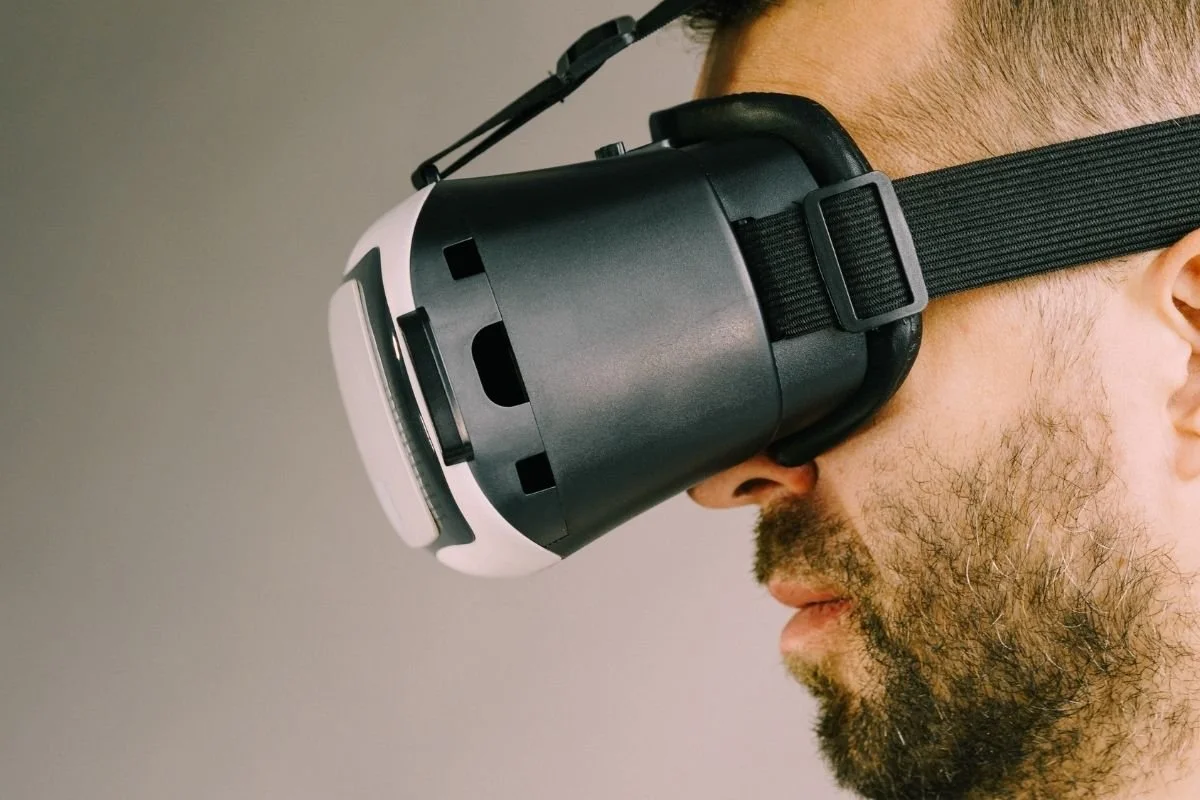
The VR intervention developed by Dr. Linton’s team consisted of six sessions of a memory scenario (a Park Stroll) and six sessions of an eye focus scenario (a Beach Stroll). A Brain Injury Center blog post explained that in the hospital bedside arm of the study, the Beach Stroll scenario resulted in “significant improvement in eye focus (from 15% to 67%), along with meaningful reductions in pain, anxiety, heart rate, and blood pressure.” In the outpatient arm of the study, the Park Stroll and Beach Stroll scenarios resulted in statistically significant, moderate improvement for both prospective memory and eye focus. Prospective memory and eye focus are “skills that directly support greater independence and everyday conversations.” See the poster/slides here. Dr. Linton is now recruiting additional patient study participants, and she is offering to share the VR scenarios in order to promote further research.
In the outpatient arm of the study, Linton and colleagues set up two groups, an intervention group and a control group, with all patients being at least one year post-TBI. The intervention group consisted of 14 patients who participated in 12 20-minute VR sessions. The control group, with 11 patients, participated in 12 sessions where they played a memory card game for 20 minutes. After the end of those 12 sessions, they received the same VR sessions as the intervention group, allowing the researchers to assess data where the intervention was delayed.
All patients before and after treatment completed a 16-Item Prospective and Retrospective Memory Questionnaire (PRMQ) on a 5-point scale ranging from 1 (never) to 5 (very often). The PRMQ asks eight questions about prospective memory, which is the ability to remember to carry out an action in the future. For example, patients would be asked how often they forget to take their medication or get the mail. Additionally, the PRMQ asks eight questions about retrospective memory, the ability to recall past events and facts. For example, patients would be asked how often they forgot a person's name or what happened the previous day. Participants also completed a single-question pass/fail memory test.
The intervention group participated in two different VR scenarios, a Park Stroll scenario for memory and a Beach Stroll scenario for eye focus. During the Park Stroll, patients were asked to hand three random items in a specific order to three different sets of park visitors. Patient results were based on the mean number of items patients correctly handed out during their stroll. During the beach stroll, they were asked to focus on a floating sphere in the center of the slow beach walk for six minutes. They measured eye focus success by how many seconds the patient could remain focused on the sphere while waves crashed and birds flew by “distracting” them.
The Park Stroll scenario resulted in moderate improvement in memory, from 2.16 to 2.83 items remembered out of 3 total items from the first session compared to the last session. The Beach Stroll scenario resulted in moderate improvement in eye focus; patients maintained eye focus for an average of 311.4 seconds during the last session, compared to 226.69 seconds during the first session. For the single-question pass/fail memory test, 9% of the original control group improved, less than 1 in 10 patients. The intervention group showed a 36% improvement in the single-question pass/fail memory test after their 12 VR sessions. The delayed intervention group demonstrated the most growth, with 57% of participants improving after the delayed intervention. The VR scenarios are available in English and Spanish.