
Myelin may be a therapeutic target for TBI
This article was initially published in the 7/23/26 edition of our Concussion Update newsletter; please consider subscribing.
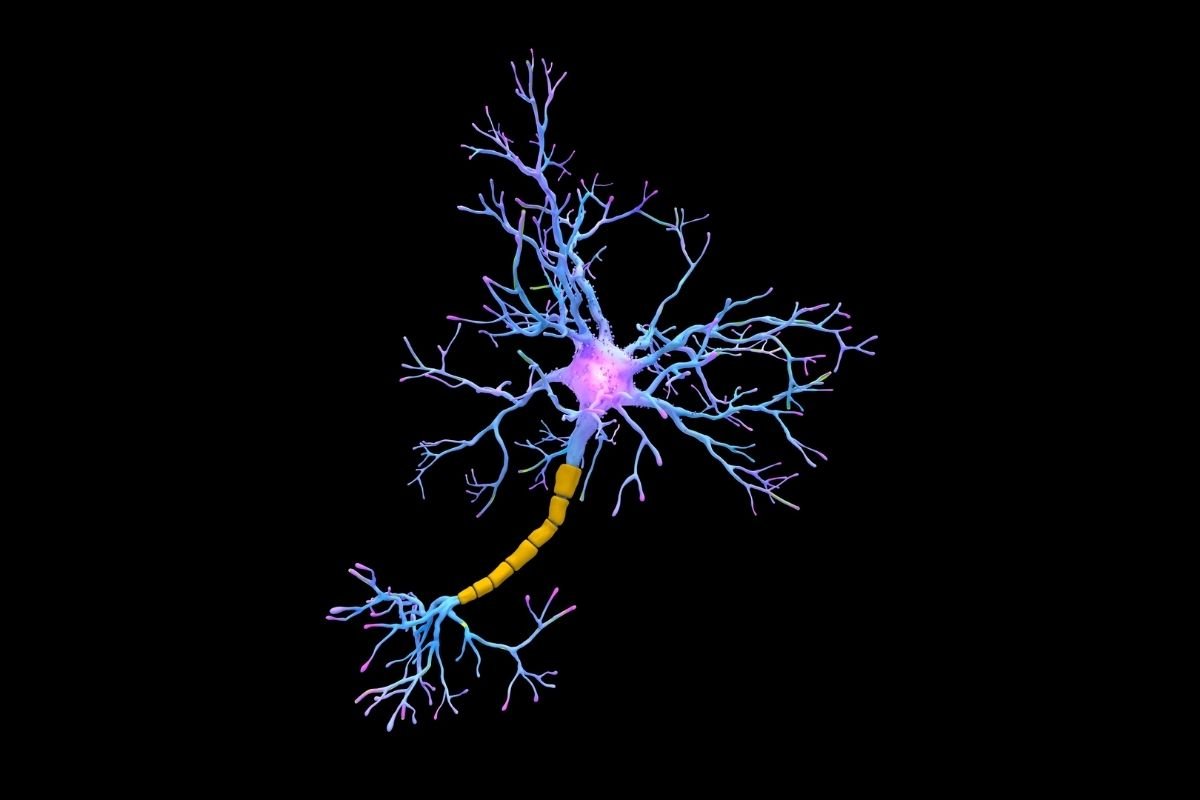
A recent review published in Occupational Diseases and Environmental Medicine proposes that myelin, a fatty coating around nerve fibers, is a central player in many brain conditions, such as normative aging, Alzheimer’s disease, Multiple Sclerosis, stroke, and traumatic brain injury. The review synthesizes data from animal studies, advanced MRI studies, and clinical trials of various remyelination drugs. Sundas Almas et al. write that myelin loss can occur early, sometimes even before the hallmark signs of some neurodegenerative diseases. They argue that instead of just reflecting long-term cognitive and neurological problems, myelin failure could actually be driving them. The authors note that “The growing recognition of myelin’s central role” has led to a “burgeoning pipeline of pro-myelinating therapies.”
The authors describe myelin as a “dynamic convergence hub fundamental to brain physiology,” and emphasize that myelin is frequently disrupted across many brain disorders instead of a secondary problem in these conditions. They cite recent work showing that successful remyelination can make the brain appear biologically younger on MRI-based brain age measures, such as in this landmark CCMR One trial where remyelination after a 6-month treatment of RXR agonist bexarotene was linked to a reduction in MRI‑estimated brain age. Based on this study and others, the authors suggest that since myelin integrity is a central mediator of brain health, enhancing myelin integrity may be a viable strategy for achieving rejuvenation of the brain’s axon-myelin system and the Central Nervous System, promoting functional recovery.
The authors highlight that myelin disruption is a common pathway across many brain disorders, including traumatic brain injury, where damage to the axon-myelin unit plays a central role in long‑term symptoms. In the case of TBI, particularly diffuse TBI, the authors note that injury to this axon–myelin system can extend into regions far from the immediate impact site, which helps explain why patients can have persistent white‑matter changes and experience cognitive problems even when conventional scans might appear normal.
The authors caution that while these findings are promising, remyelination therapies are not without their limitations. These therapies must be carefully timed and personalized to individual patients. In some chronic injury models, poorly targeted or late treatment can exhaust the cells that generate new myelin. Moreover, individual factors like biological age and genetics can also influence the effects of the treatment. Overall, the researchers call for more precise imaging and the development of biomarkers to identify patients who are most likely to benefit from personalized myelin-focused treatments.
