
This article was initially published in the 11/19/26 edition of our Concussion Update newsletter; please consider subscribing.
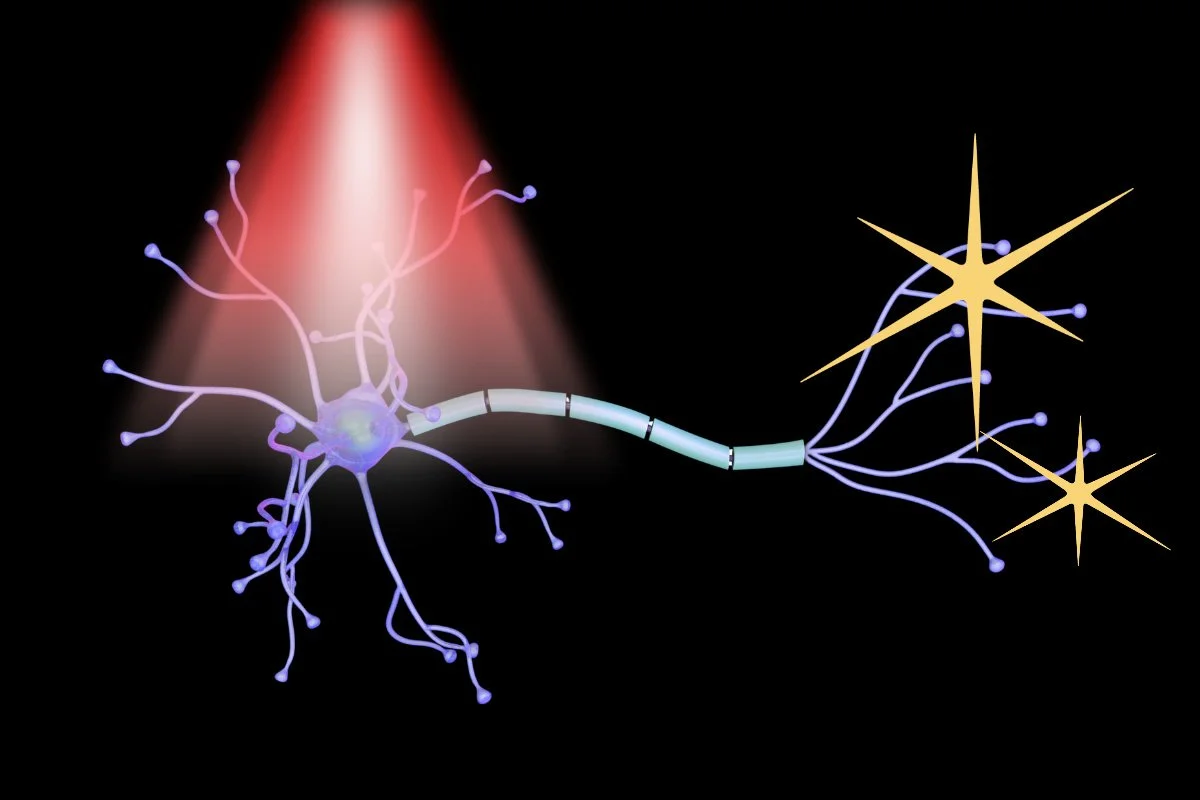
The 2026 Nobel Prize in Physiology or Medicine was awarded to Karl Deisseroth, Peter Hegemann, and Georg Nagel for discovering a light-sensitive protein that allows researchers to turn nerve cells on and off with specific frequencies of light. According to an article by Simon Spichak in Being Patient, this prize-winning discovery has led to the growth of the field of optogenetics, where research is shedding light on memory, emotions, and behavior. The technology is currently in clinical trials to treat vision loss, and researchers are working on ways to deliver the genes and light into the brain.
The light-sensitive protein is called channelrhodopsin and was originally found in a species of pond alga. Using gene editing, researchers can trigger channelrhodopsin to be produced in nerve cells. They can then control the nerve cell’s activity by exposing it to light. While previous tools allowed researchers to see which neurons were active during a behavior, optogenetics lets researchers turn certain nerve cells on or off and see how that affects the behavior. Viviana Gradinaru, a professor at Caltech who worked in Deisseroth’s lab as a PhD student, commented that optogenetics “lets us move from correlation to causation.”
Note from Zoe Marquis, Program and Operations Associate:
I used optogenetics in one of my undergraduate neuroscience labs. We used a specific light frequency to turn on a target neuron circuit, making fruit flies engage in courting behaviors. It’s fascinating to think back to my experience in the lab and realize that the same technology is now receiving the Nobel Prize and being tested as a treatment for vision loss. I will be interested to see other ways optogenetics might be applied to brain health.
