Super Bowl Special Edition: Light Therapy Promotes Neurological Resilience in College Football Players (2/5/26 Newsletter)
This week, our lead article, Light Therapy Promotes Neurological Resilience in College Football Players, is in the Therapies Currently Available category.
Also in this newsletter:
Writers: Malayka Gormally, Zoe Marquis, Anni Yurcisin
Editors: Conor Gormally, Malayka Gormally, & Zoe Marquis
Do you find the Concussion Update helpful? If so, forward this to a friend and suggest they subscribe.
Opportunities

Tuesday, February 10, 6 pm ET: A free webinar, Persisting Cognitive Symptoms, presented by Dr. Robin Green, hosted by The Canadian Concussion Centre. Register in advance.
Thursday, February 12, 7 pm ET: A free Zoom session, Concussion Outreach Prevention Education; “Participants will learn valuable information on how to prevent concussions and to successfully reintegrate a concussed student into the classroom.” Presented by the Brain Injury Association of New York State, Concussion Outreach Prevention Education (COPE), and the New York State Athlete Trainers’ Association. Includes free CEUS. Learn more and register here.
Wednesday, February 18, 6 pm ET: An interactive workshop, Yoga, Positive Psychology, and Neuroplasticity for Brain Injury Healing, presented by Kristine Kaoverii Weber, MA, C-IAYT, and hosted by LoveYourBrain. Tickets range from free to $37.50. Register in advance.
Tuesday, February 24, 6 pm ET: A free webinar, Neuropsychological Assessment in Persisting Concussion Symptoms, presented by Dr. David Gold, hosted by The Canadian Concussion Centre. Register in advance.
March 20–22: Love Your Brain Summit: Holistic Healing After Brain Injury. A 3-day online conference for patients, caregivers, and providers, centering on evidence-based holistic therapies for brain health and healing, including neurofeedback, trauma-informed mindfulness, gut-brain health, and non-invasive brain stimulation.
Therapies Currently Available
Light Therapy Promotes Neurological Resilience in College Football Players
Contact sport athletes risk not just concussions, but the cumulative effects of repetitive head acceleration events (RHAE), which include direct hits to the head and blows to the body that transmit forces to the brain. RHAE exposure contributes to neuroinflammation and decreased white matter integrity in even one season of participation in contact sports, and cumulative RHAE over years appears to increase the risk of neurodegenerative disease, including chronic traumatic encephalopathy (CTE). What can be done to reduce the neurodegenerative risks from contact sports?
In a first-of-its-kind study with active college football players, researchers investigated the potential impact of a transcranial photobiomodulation (PBM) intervention, using a commercially available headset to deliver near-infrared light to the brain through the skull. The PBM intervention resulted in sustained microstructural stability in athletes' brains throughout a 16-week college football season, including preseason training. In contrast, the brains of athletes who received a sham PBM treatment showed marked increases in neuroinflammation and axonal damage, and a reduction in white matter integrity, by the end of the football season.
Published in the Journal of Neurotrauma, the double-blinded study compared pre- and post-season diffusion MRI scans of 26 NCAA Division 1 football players. Their findings suggest that “By mitigating the microstructural changes associated with RHAE, PBM may reduce the risk of long-term neurological impairment and enhance the safety of sport participation.” In a University of Utah press release, lead author Dr. Hannah M. Lindsey remarked, “My first reaction was, ‘There’s no way this can be real. That’s how striking it was.’” Concussion Alliance recommends this 2-minute news report from KSL News Utah.
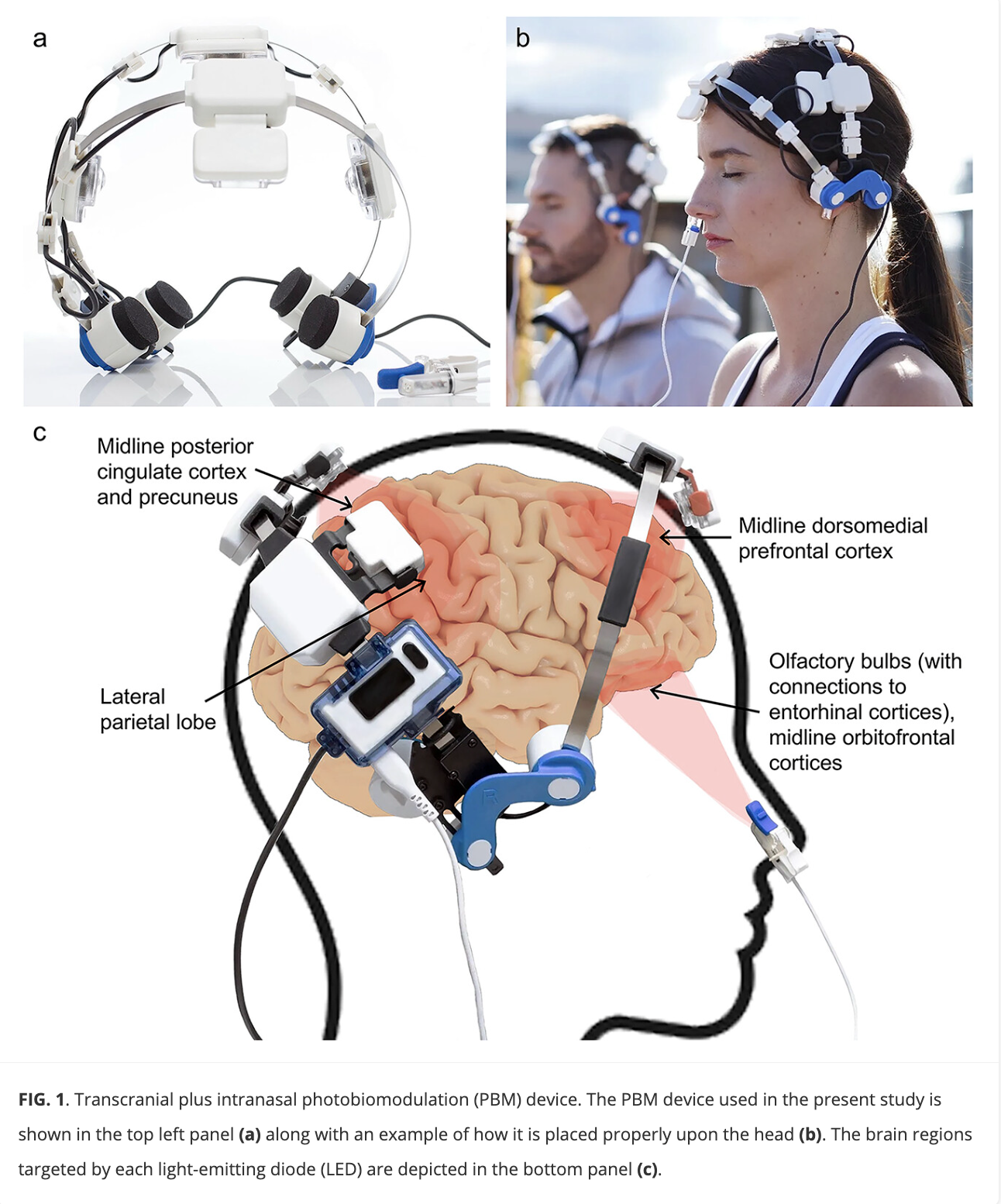
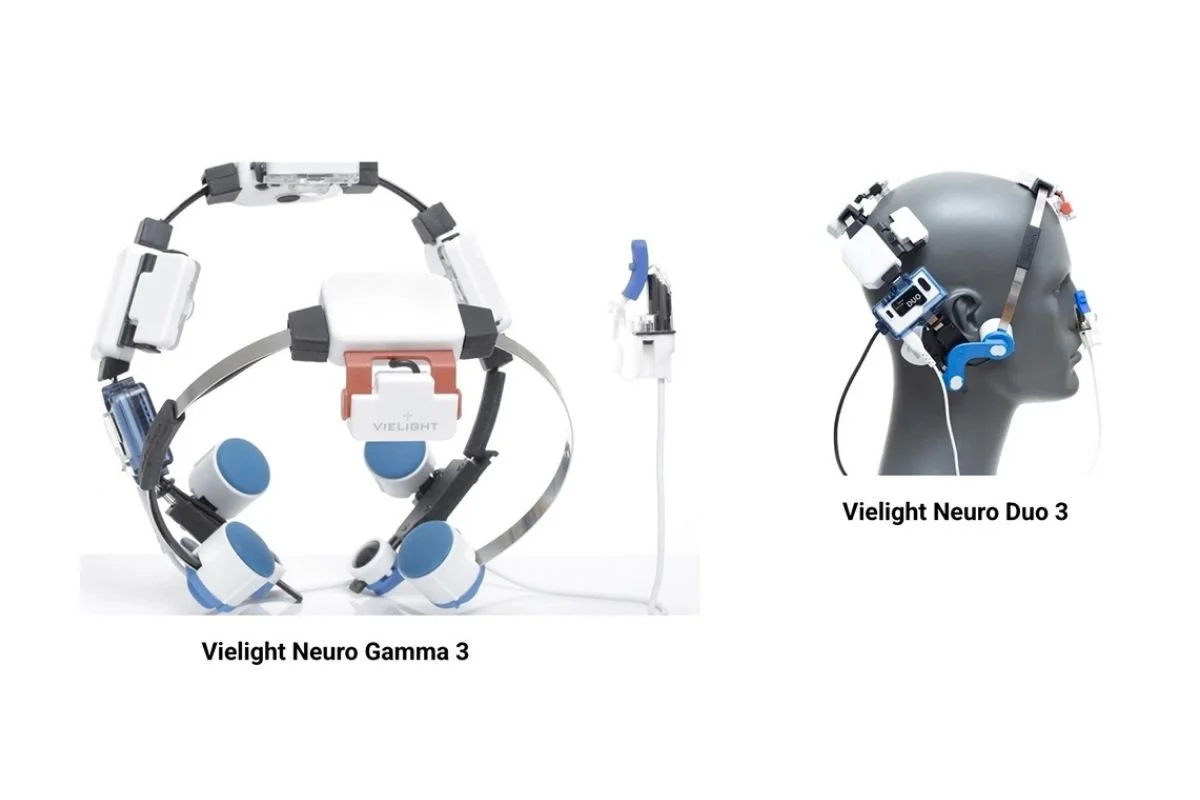
How does PBM positively affect the brain? The authors cite prior research findings that PBM interventions “reduce neuroinflammatory signaling, enhance mitochondrial function, increase cerebral blood flow, and facilitate neuroplasticity.” For the intervention, the researchers used the Vielight Neuro Gamma, a commercially-available headset with four specialized LEDs that deliver 810 nm near-infrared light, pulsed at 40 Hz, through the skull to the brain. Attached to the headset is a nasal clip with an LED that delivers near-infrared light through one nostril into the frontal lobes of the brain. The sham version of the device did not deliver near-infrared light (which is invisible to the eye). The athletes self-administered the treatment (either PBM or sham) for 20-minute treatments three times a week, overseen by the research staff. They used the 2020 Neuro Gamma version 3, following the Vielight-recommended protocol at the time, which was 3 times per week.
The study authors refer to Vielight’s new suggested protocol of 5-6 times per week, recommending that “Future studies should incorporate these updated protocols and explore newer PBM devices with additional targeting capabilities, such as direct cerebellar illumination.” Concussion Alliance notes that the currently available version, the Vielight Neuro Gamma version 4, adds an LED light at the back of the head that targets the cerebellum, and so is likely the device the authors are referring to. (Concussion Alliance has no affiliation with Vielight.)
While this study did not address functional outcomes, such as pre- and post-season cognitive function, the authors note that chronic neuroinflammation has been implicated in cognitive dysfunction, disrupted sleep, and mood disturbances. The authors note that “By mitigating inflammatory responses, PBM may help preserve the neural circuitry critical for cognitive function, emotional regulation, and restorative sleep.” On this topic, some of these same researchers recently published a study on PBM and cognition. In our synopsis of this study, we wrote that 8-10 weeks of at-home treatment with a transcranial photobiomodulation (tPBM) device resulted in statistically significant improvements in cognitive function in adults exposed to repetitive head acceleration events (RHAE).
For this current study, Lindsey et al. note that “longitudinal studies that follow athletes over multiple seasons” are needed to determine if PBM “could potentially reduce the cumulative burden of neuroinflammation that contributes to long-term neurodegenerative risk.” Limitations of this study include the small sample size and the lack of a control group of athletes in limited-contact or non-contact sports.
Sports
Guardian Cap controversy reaches the NFL’s biggest stage
During this weekend’s Super Bowl, New England Patriots offensive lineman Jared Wilson will wear a Guardian Cap, a helmet cover designed to blunt head impacts. But conflicting claims by the NFL and Guardian Sports (the company that makes the Guardian Caps) bring the benefit of the caps into question, according to a recent article by Ken Belson for The New York Times.
While the NFL claims that Guardian Caps reduce the risk of concussions, Erin Hanson, a co-founder of Guardian Sports, said the Guardian Cap “has nothing to do with concussions.” Rather, according to the company, the caps are meant to “blunt the impact of smaller hits to the head that are linked to long-term brain damage.”
The controversy stems from a study that looked at the rate of concussions in preseason practices from 2018 to 2023. In 2021, the NFL required linemen, tight ends, and linebackers to wear Guardian Caps in training camp. In 2023, the NFL added running backs and fullbacks to the list and mandated caps for these positions in all contact practices. According to the researchers, including some affiliated with the N.F.L., concussion rates declined between 54 and 62 percent over that period. However, they cautioned against any conclusions attributing this reduction to the Guardian Caps alone.
According to Belson, the researchers also noted that the relationship between concussions and the use of Guardian Caps lost statistical significance “when looking only at concussions caused by hits to the helmet shell — one of the most common causes of concussions.”Belson notes that a position paper from the National Athletic Trainers’ Association specifically states that “‘helmet add-on products may overstate injury prevention benefits.’”
Reissue: Sports
XT Guardian Caps do not reduce the risk of sport-related concussions in high school football players
By Anni Yurcisin. This article was initially published in the 11/6/25 edition of our Concussion Update newsletter

In the East Bay in California, several high school football players sustained a concussion in one Friday night game, with one player having to be wheeled off on a stretcher, according to an NBC Bay Area article by Pete Suratos. Parents struggled with watching their kids get injured, looked for a lifeline to prevent concussions, and decided on Guardian Caps. Although they haven’t been proven to reduce concussions in high school football players, parents have been raising money to buy one for every player.
A recent study in the British Journal of Sports Medicine found that Guardian Caps (GCs), an add-on padded “shell device” that goes atop a helmet, do not reduce the risk of sport-related concussions (SRCs) in high school football players. Across more than 2600 high school football players, GC use during practice was not associated with decreased SRC risk in practices or in games, including when accounting for the increased risk factor of having sustained an SRC in the past. While laboratory experiments have shown that extra padding, such as GCs, can limit simulated head impact forces, and previous data from the NFL have shown a decrease in preseason concussions with GC use, no previous studies have looked at the real-world efficacy of high school GCs, which, notably, are a different model from those used in the NFL.
The GCs worn in the NFL (the NXT model) weigh approximately 357 grams and are approximately 2.5 cm thick, while those worn by high schoolers (the XT model) weigh approximately 220 grams and are approximately 1.5 cm thick. Because of this difference, NFL studies cannot be extrapolated to high school athletes. This study illustrates that there is no evidence to suggest that the XT model GCs used by high school athletes reduce SRCs. Importantly, as Dr. Erin Hammer told the UW-Madison School of Medicine and Public Health, “... using these devices may provide false reassurance to players and their parents who are hoping to reduce their kids’ risk of concussion.”
Of the 180 SRCs recorded throughout the year by athletic trainers, 64 occurred during practice and 116 occurred during games. The number of SRCs occurring in practice was remarkably similar between GC-wearing and non-GC-wearing athletes; 33 of the practice-related concussions were in athletes wearing GCs, while 31 practice-related concussions were in athletes not wearing GCs. In what is standard practice among football players who wear GCs, athletes who wore GCs during practices did not wear them during games. Of the 116 game-related concussions, 68 occurred in athletes who wear GCs at practice, and 48 occurred in those who do not.
The authors urge sport-related institutions to implement evidence-based changes to reduce SRCs rather than pursuing new technologies that haven’t been proven to reduce SRCs in non-laboratory settings, such as GCs. They highlight three changes that have been connected to a reduction in SRCs: policies aimed at limiting contact in football practices (which reduced the rate of practice-related SRCs by 64%), coach participation in a comprehensive football safety training program (which reduced the rate of practice and game-related SRCs by 50%), and modifications to helmets with increased padding in targeted areas (which were associated with a 31% lower rate of SRC). These changes, while less flashy than technologies like GCs, have been proven to decrease the risk of SRC and should be the targets for high school leagues to improve the cognitive health of their athletes.
You Can Support Concussion Patients

Join our community of monthly donors committed to improving how concussions are prevented, managed, and treated, thereby supporting long-term brain health for all. Learn more.
You can also make an impact with a one-time gift or tax-friendly options such as Donor Advised Funds (DAFs), IRA Charitable Rollovers, and Planned Giving: leave a gift in your will. Learn more.