Olympic gold medal bobsledder Elana Meyers Taylor advocates for better concussion care (2/26/26 Newsletter)
This week, our lead article, Olympic gold medal bobsledder Elana Meyers Taylor advocates for better concussion care, is in the Sports category.
Also in this newsletter:
Writers: Sravya Valiveti, Zoe Marquis, Anni Yurcisin
Editors: Conor Gormally, Malayka Gormally, & Zoe Marquis
Do you find the Concussion Update helpful? If so, forward this to a friend and suggest they subscribe.
Opportunities
Concussion Alliance special virtual events for March, Brain Injury Awareness Month
Thursday, March 5, 12 pm PT: Lunch & Learn with the Co-Founders! | Brain Injury Awareness Month. No pre-registration required; click on the event link to join the Zoom call.
Wednesday, March 18, 1 pm PT: Concussion Advocate Training Workshop | Brain Injury Awareness Month. No pre-registration required; click on the event link to join the Zoom call.
Monday, March 30, 3 pm PT: Virtual Happy Hour & Community Q&A. No pre-registration required; click on the event link to join the Zoom call.
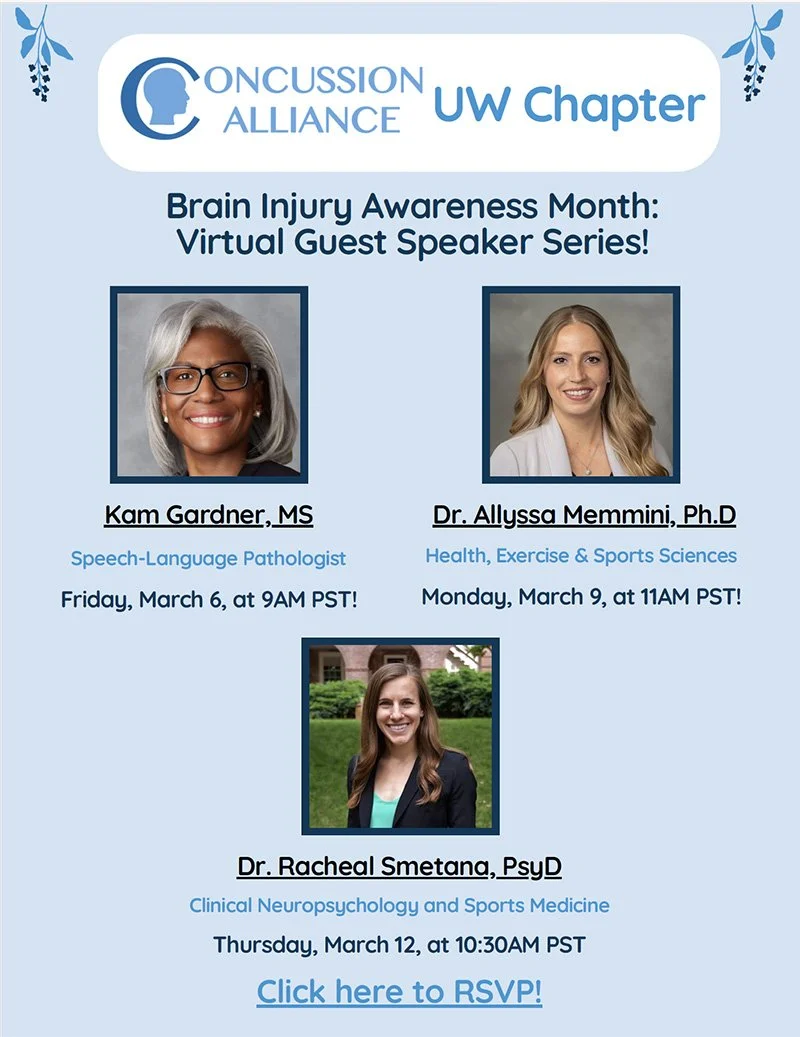
The University of Washington Concussion Alliance Chapter is also hosting a speaker series for Brain Injury Awareness Month
The speakers will present for half an hour, and then undergraduate students are welcome to ask career- or science-related questions.
Friday, March 6, 9 am PT: Concussion Alliance UW Chapter | Brain Injury Awareness Month Virtual Guest Speaker Series | Kam Gardner, SLP. Speech-Language Pathologist and Concussion Alliance board member Kam Gardner will speak about cognitive assessment and rehabilitation after a concussion. Please RSVP here; you will receive a Zoom link.
Monday, March 9, 11 am PT: Concussion Alliance UW Chapter| Brain Injury Awareness Month Virtual Guest Speaker Series | Allyssa Memmini, PhD. Dr. Memmini will speak about Health, Exercise, and Sport Sciences. Please RSVP here; you will receive a Zoom link.
Thursday, March 12, 10:30 am PT: Concussion Alliance UW Chapter| Brain Injury Awareness Month Virtual Guest Speaker Series | Rachael Smetana, PsyD. Dr. Rachael Smetana will speak about Clinical Neuropsychology and Sports Medicine. Please RSVP here; you will receive a Zoom link.
Other Opportunities
March 4, 2 pm – 4 pm ET: TBICoE Education Series: Performance Nutrition After TBI. No registration necessary. Click here to join the session.
Wednesdays, 5 pm ET: ECHO UHN Traumatic Brain Injury program. The next session, Assessment and diagnosis of children/youth concussion, is on March 4. Register in advance.
March 5, 1 pm ET: TBICOE Clinical Recommendation Training Series: Assessment of Dizziness and Visual Disturbances Following Concussion. No registration necessary. Click here to join the session.
March 20–22: Love Your Brain Summit: Holistic Healing After Brain Injury. A 3-day online conference for patients, caregivers, and providers, centering on evidence-based holistic therapies for brain health and healing, including neurofeedback, trauma-informed mindfulness, gut-brain health, and non-invasive brain stimulation.
Ongoing: Love Your Brain Online yoga, mindfulness & education programs. These six-week programs run in April, July, and October. Participants may choose between group discussion programs and yoga and discussion programs. There are also affinity group programs for caregivers, BIPOC, athletes, and other communities.
Call for participants: The Defense Health Agency and Veterans Health Administration are looking for concussion patients to share their experiences in a 2-hour virtual focus group on Friday, March 20, at 1 p.m. ET. Participants will discuss their experiences living with and recovering from concussion and provide feedback on a new clinical practice guideline. The deadline to register is Thursday, March 12, at 5 p.m. ET. To qualify, participants must have been diagnosed with concussion, be at least 18 years old, and get most of their concussion care at a military hospital or clinic.
Call for participants: If you live in Nova Scotia, you may be eligible to participate in a study on disparities in concussion education and recovery protocols within Nova Scotia's Black populations. Working at Acadia University with Dr. Colin King, Master's of Kinesiology student Michaela Dankwa is looking for adults of African, African Nova Scotian, and Caribbean descent, as well as professionals who work with these communities, to complete brief, one-on-one interviews about their experiences. While the study focuses on the lived experiences of Nova Scotia’s Black population, anyone 18+, regardless of racial and ethnic backgrounds, is welcome to complete the questionnaire and contribute to this research. Contact 0309782d@acadiau.ca for more information.
Sports
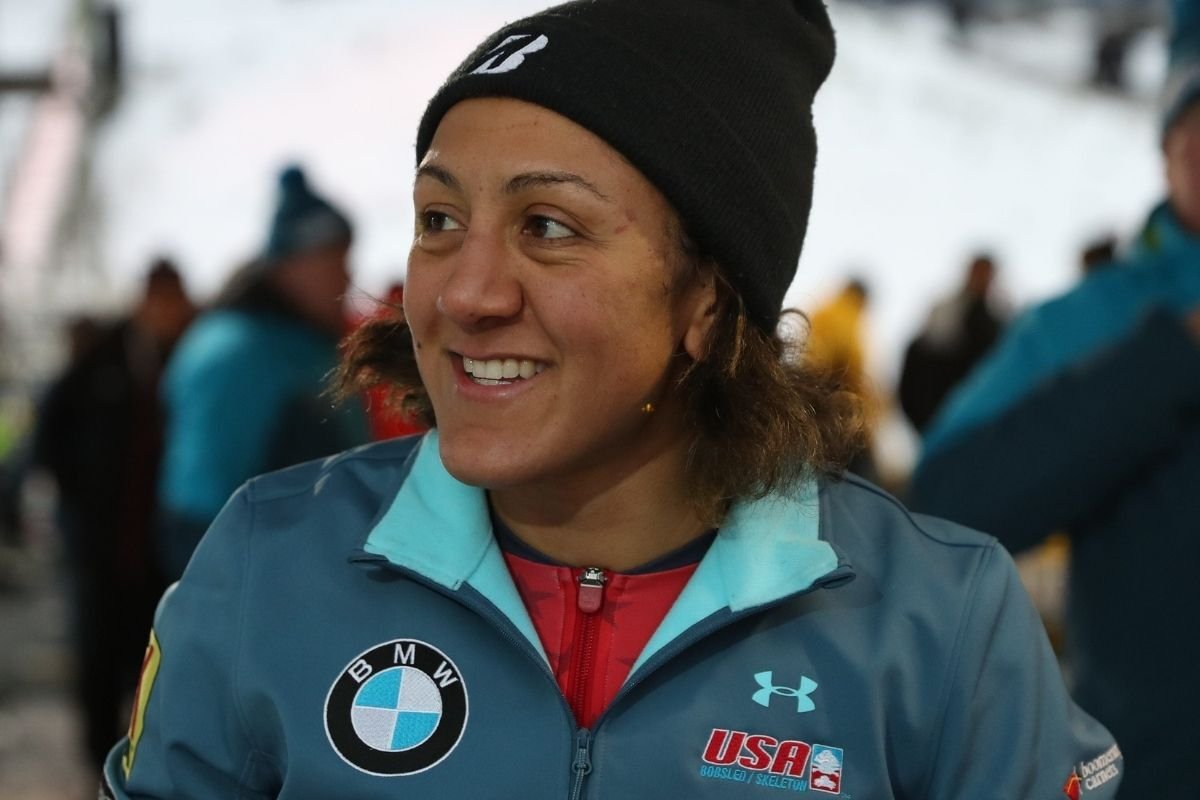
Olympic gold medal bobsledder Elana Meyers Taylor advocates for better concussion care
Attribution: Sandro Halank, Wikimedia Commons, CC BY-SA 4.0
This file is licensed under the Creative Commons Attribution-Share Alike 4.0 International license.
Olympic gold medal Bobsledder Elana Meyers Taylor sustained a concussion in 2015 that left her with persisting symptoms for years after. Going into the 2026 Winter Olympics, her perspective and goals had shifted, according to an article by Gina Shaw for Brain & Life. “It’s not necessarily about winning every week. It’s about winning when it matters most,” she said. “Bobsled doesn’t define me. If it becomes too risky, then we step away.” Along with her change of perspective, Meyers Taylor now advocates for better concussion education and care. She highlights the importance of recognizing concussion as a rehabilitative injury, engaging in active, multidisciplinary rehabilitation, and expanding research on concussion in women.
One of the most decorated bobsledders in U.S. history, Meyers Taylor has won six Olympic medals across five Games—including a gold medal in the 2026 Winter Olympics. However, her bobsled career was interrupted after she sustained a concussion in 2015. At first, she convinced herself that she was fine and continued racing. Her cognitive evaluations and brain scans were normal. But something wasn’t right. She experienced significant mood changes after her concussion, and during a competition in Altenberg, Germany, she “felt like [she] blacked out in the middle of a curve.” This experience prompted her to stop competing and seek care.
Meyers Taylor’s experience is not uncommon. Concussions affect the brain at the cellular level, so they do not show up on standard clinical brain imaging scans. Because of this, clinicians rely on self-reported symptoms and observable signs for diagnosis. On top of that, concussion symptoms can show up differently in different people, and some people may have different subsets of symptoms than others.
When Meyers Taylor decided to seek care for her persisting symptoms, she was referred to a multidisciplinary concussion rehabilitation program. There, she found out that she had issues with eye tracking, neck stability, autonomic function, and nutrition. She worked with her care team to engage in active rehabilitation, including visual and vestibular exercises, balance training, therapies meant to regulate the autonomic nervous system, and vagus nerve stimulation. Meyers Taylor also pledged to donate her brain for research. “There are so few women’s brains studied,” she said. “We’re more likely to get concussions, and we don’t know enough about how they affect us long term.”
Diagnostics
Using visio-vestibular examination in the emergency department helps with earlier, more accurate concussion diagnosis
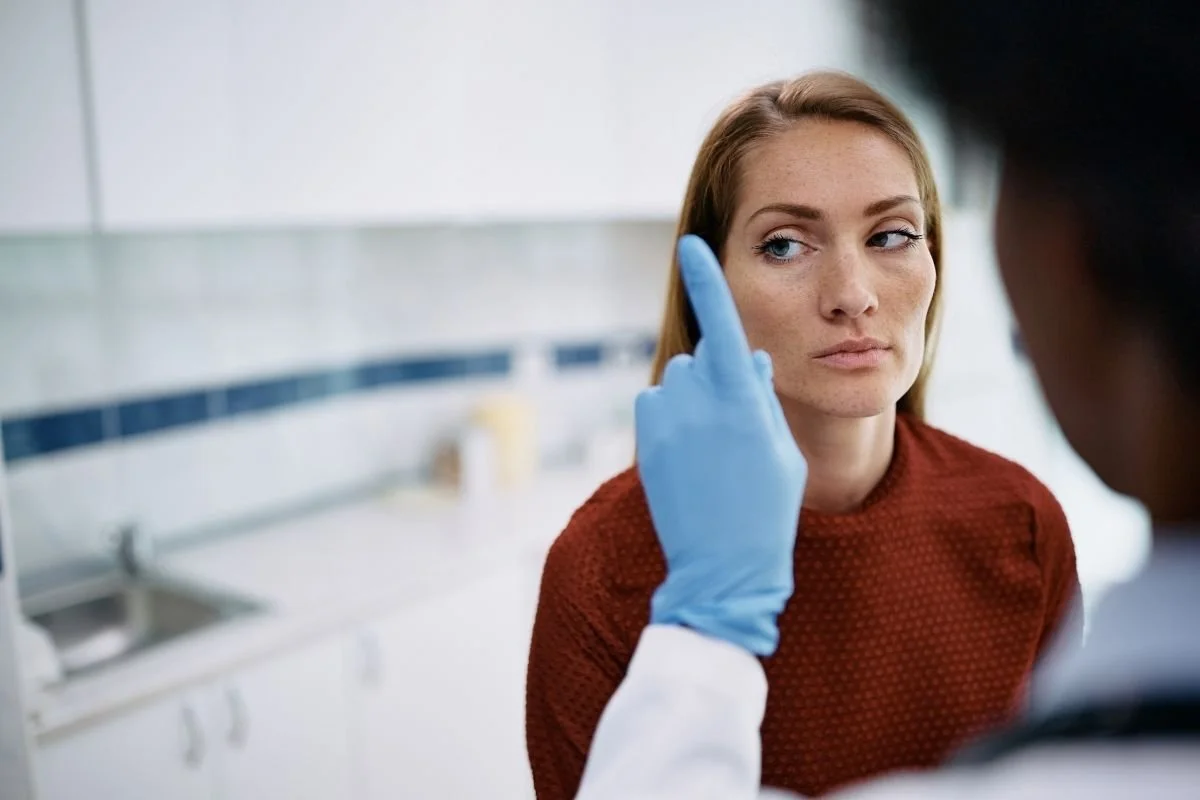
A recent article published in the Children’s Hospital of Philadelphia’s (CHOP’s) Research in Action blog by Dr. Daniel Corwin emphasizes the importance of using CHOP’s visio-vestibular examination (VVE) as a part of first-line concussion management in the emergency department. Due to the fast-paced environment of the emergency department, clinicians may miss subtle signs of acute concussion. This can lead to delayed diagnosis and patient care, and, in turn, prolonged recovery and worse outcomes. Dr. Corwin emphasizes that emergency room physicians play a crucial role in diagnosis, patient education, and referral, so timely and accurate diagnosis is crucial. The VVE, which takes only 2-3 minutes to perform, can aid in diagnosis, risk stratification, and functional assessment. Dr. Corwin joined Dr. Master and Kelly Sarmiento to author a related article for ACEP Now, noting that the VVE facilitates a “more accurate concussion diagnosis in the ED, which is linked to better recovery.”
The VVE is a series of maneuvers that can be quickly administered in an acute care setting to evaluate for concussion. The examination was first developed and used at CHOP to identify initial signs associated with concussion and assist with accurate diagnosis. It works by testing changes in vision, oculomotor tracking, and balance. Symptoms such as dizziness, headaches, blurred vision, nausea, and sensitivity to light or noise can all point to visio-vestibular dysfunction. However, these symptoms may only show up with provocation, so they can be easy to miss if a physical exam does not actively test for these abnormalities during initial evaluation. The VVE can be used in pediatric patients as young as five years of age and can be especially useful to evaluate concussions in pediatric patients as the data shows that 9 times out of 10 children present with visual and vestibular dysfunction when they have a concussion.
Dr. Corwin notes that “Over the past decade, the exam has been incorporated into the routine workflow of clinicians practicing in CHOP EDs, to where now nearly 80% of our patients with concussion will have a VVE performed upon diagnosis.” The American College of Emergency Physicians (ACEP) has made short, step-by-step instructional videos on performing the VVE available to emergency medicine physicians to make the training process more seamless. In VVE video #4, Dr. Corwin explains that the VVE provides risk stratification: “We found a really strong correlation between a higher number of VVE deficits and prolonged recovery times.” With patients with a high burden of VVE deficits, clinicians can consider earlier referral to a concussion specialist for vestibular rehabilitation.
When clinicians take an extra few minutes to evaluate and diagnose a concussion using the VVE, it helps them identify any limitations to visual and vestibular function that patients need care for. This knowledge can help providers work more effectively with patients to find the most appropriate treatment approach to address a patient’s symptoms, which can allow them to recover and return to their usual activities faster. For functional deficits identified with the VVE, Dr. Corwin says, “We can think about prescribing relevant accommodations relative to the deficits that we identify in the ED. For example, that child that is struggling with vertical saccades may be able to get back into school more expeditiously with an accommodation for preprinted notes.”
Mental Health
Jungian psychology: the loss and subsequent rebuilding of the self following traumatic brain injury
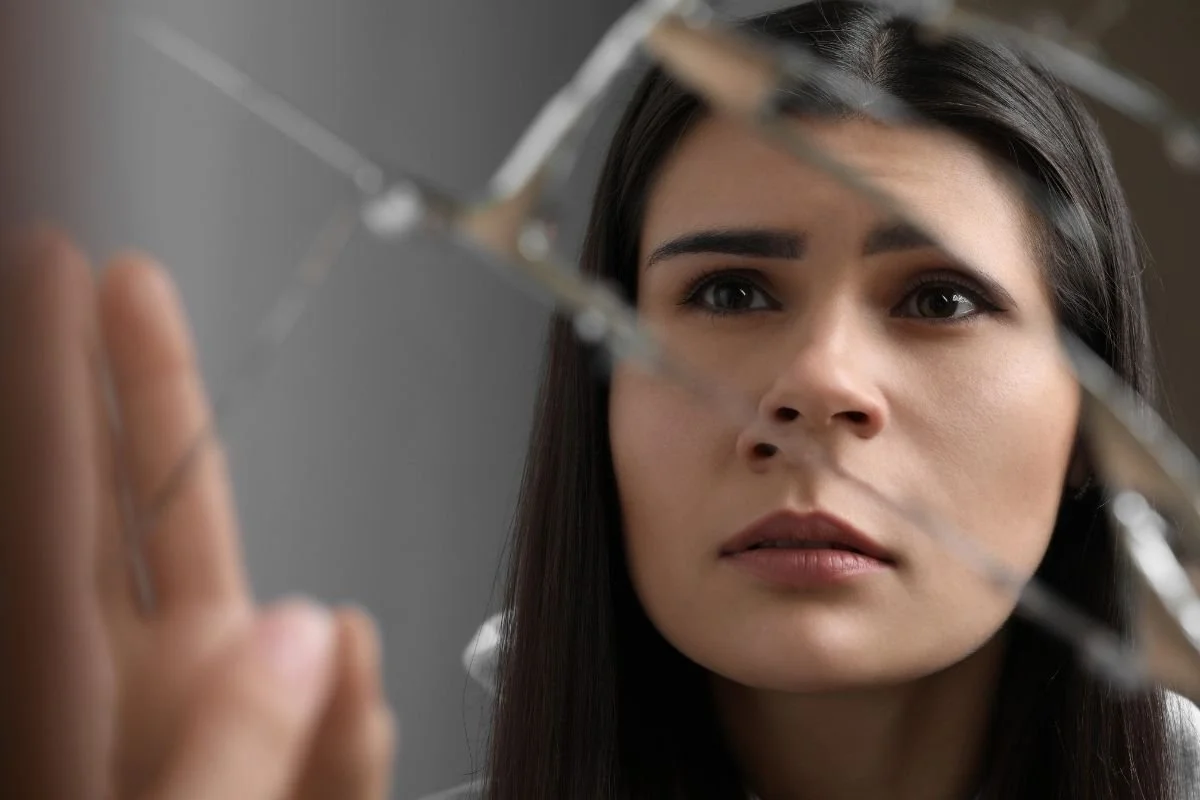
A recent article published in Neuro Rehab Times details a study that explored the loss and subsequent rebuilding of the self following traumatic brain injury (TBI) through the framing of Jungian analytical psychology. This area of psychology focuses on creating a sense of oneness within the self and on integrating all aspects of the self. In the article, these broad concepts are applied through analyzing the autobiographical narratives of TBI patients to give a different perspective on what people experience following a TBI. In reviewing several earlier studies, author Rebekah Dawson found two main themes across the patient narratives: the immediate loss of self and the rebuilding of the self that comes afterwards. Following TBI, individuals shared that they weren’t the same person as before, highlighting the sense of disconnection, alienation, and grief that people feel for their past self. Dawson highlights how important it is that the treatment for TBI includes a focus on patients’ self-perception, as this allows patients to rebuild their sense of self. Dawson quotes Bruce Jennings, the author of a 2006 Hastings Center Report, who says, “The real tragedy of TBI occurs when and if we allow the physical damage to objectify persons, reducing them to their impaired body and altered behaviour.”
The narratives were shared by people who experienced a TBI, and thematic analysis was used to identify two main themes: loss and reconstruction. In the initial period after their TBI, people experience a sort of “disruption of the psyche”, where their sense of self is fragmented. Their current self is so separate from their prior idea of who they were that they feel this sense of alienation and severe loss. However, there is a turning point where this fragmentation transforms into understanding and coherence, leading to an acceptance of the person they are post-injury. Particularly important to this healing is community, as Dawson notes. “In Jungian terms, relationships provide the relational container where fragments of the self can be held, recognised, and integrated.”
You Can Support Concussion Patients

Join our community of monthly donors committed to improving how concussions are prevented, managed, and treated, thereby supporting long-term brain health for all. Learn more.
You can also make an impact with a one-time gift or tax-friendly options such as Donor Advised Funds (DAFs), IRA Charitable Rollovers, and Planned Giving: leave a gift in your will. Learn more.