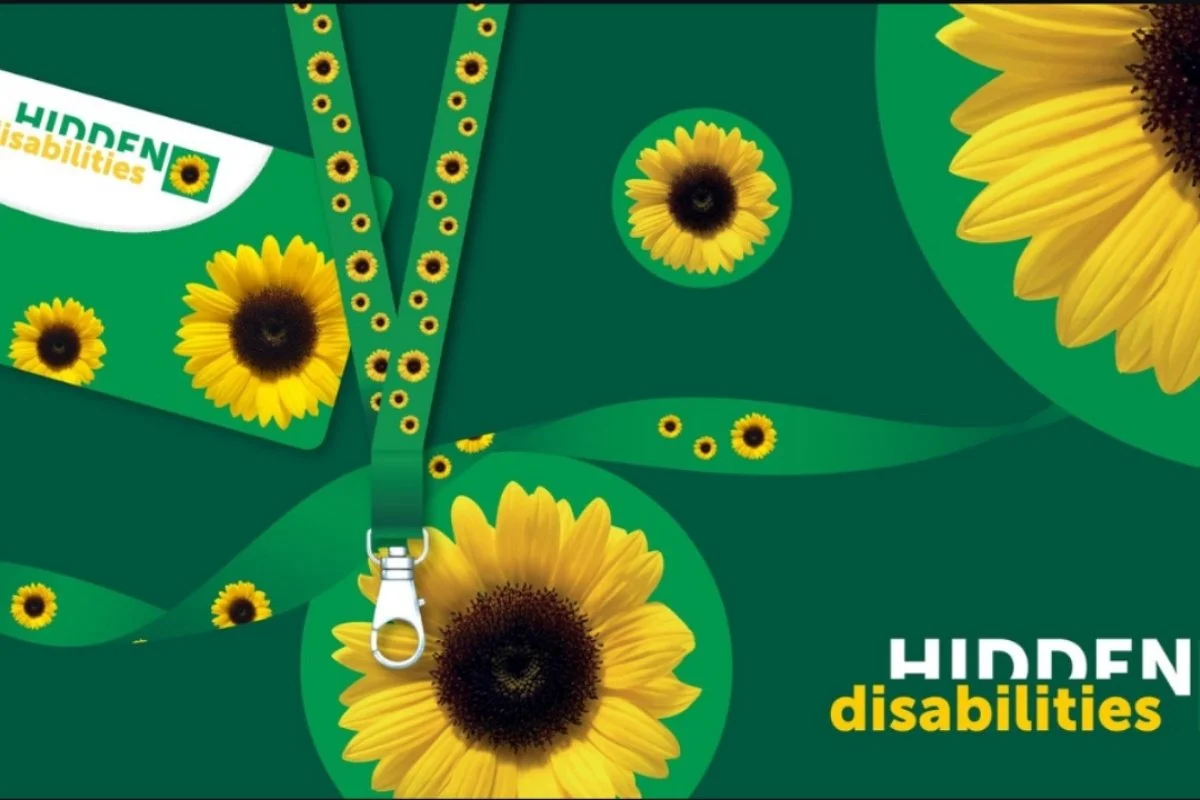
This week, our lead article, The Sunflower Symbol: Recognizing and supporting people with invisible disabilities, is in the Advocacy category.
Also in this newsletter:
Researchers develop a tool to assess fear avoidance after concussion
P7C3-A20 drug reverses the effects of Alzheimer’s disease in mice
Writers: Zoe Marquis, Anni Yurcisin
Editors: Conor Gormally, Malayka Gormally, & Zoe Marquis
Do you find the Concussion Update helpful? If so, forward this to a friend and suggest they subscribe.
Opportunities
Today! Thursday, January 29, 2 pm PT: A free webinar, Seen in the Unseen: Understanding and Supporting Hidden Disabilities for Survivors and Partners, presented by Caterina Turner, hosted by Brain Northwest. Optional registration in advance.
March 20 – 22, Early bird rates through January 31: Love Your Brain Summit: Holistic Healing After Brain Injury. A 3-day online conference for patients, caregivers, and providers, centering on evidence-based holistic therapies for brain health and healing, presented by 16 experts in a range of fields. Topics include neurofeedback, trauma-informed mindfulness, gut-brain health, and non-invasive brain stimulation. Early bird rates are $49 (scholarship), $119 (standard, includes recordings/slides), and $200 (advocate/supporter).
Tuesday, February 10, 6 pm ET: A free webinar, Persisting Cognitive Symptoms, presented by Dr. Robin Green, hosted by The Canadian Concussion Centre. Register in advance.
Thursday, February 12, 7 pm ET: A free Zoom session, Concussion Outreach Prevention Education; “Participants will learn valuable information on how to prevent concussions and to successfully reintegrate a concussed student into the classroom.” Presented by the Brain Injury Association of New York State, Concussion Outreach Prevention Education (COPE), and the New York State Athlete Trainers’ Association. Includes free CEUS. Learn more and register here.
Tuesday, February 24, 6 pm ET: A free webinar, Neuropsychological Assessment in Persisting Concussion Symptoms, presented by Dr. David Gold, hosted by The Canadian Concussion Centre. Register in advance.
Have our resources been meaningful to you? We need your help!

The beginning of the year is always a good time to reflect on the past year and set goals for the next. At Concussion Alliance, part of that reflection is creating our annual impact report. This report lets us articulate and share the ways we’ve influenced the lives of concussion patients, researchers, and medical providers in 2025. Last year, we featured the story of concussion patient Michelle Limmer. This year, that story could be yours.
If you’ve engaged with our resources over the past year, help us inspire others by sharing your story. Tell us about your experience and how you connected with Concussion Alliance. Not only will this help us articulate our impact and reach even more people who need our help, it will also let other members of the community find hope and realize they’re not alone.
Resource Highlight: Recovery Guide
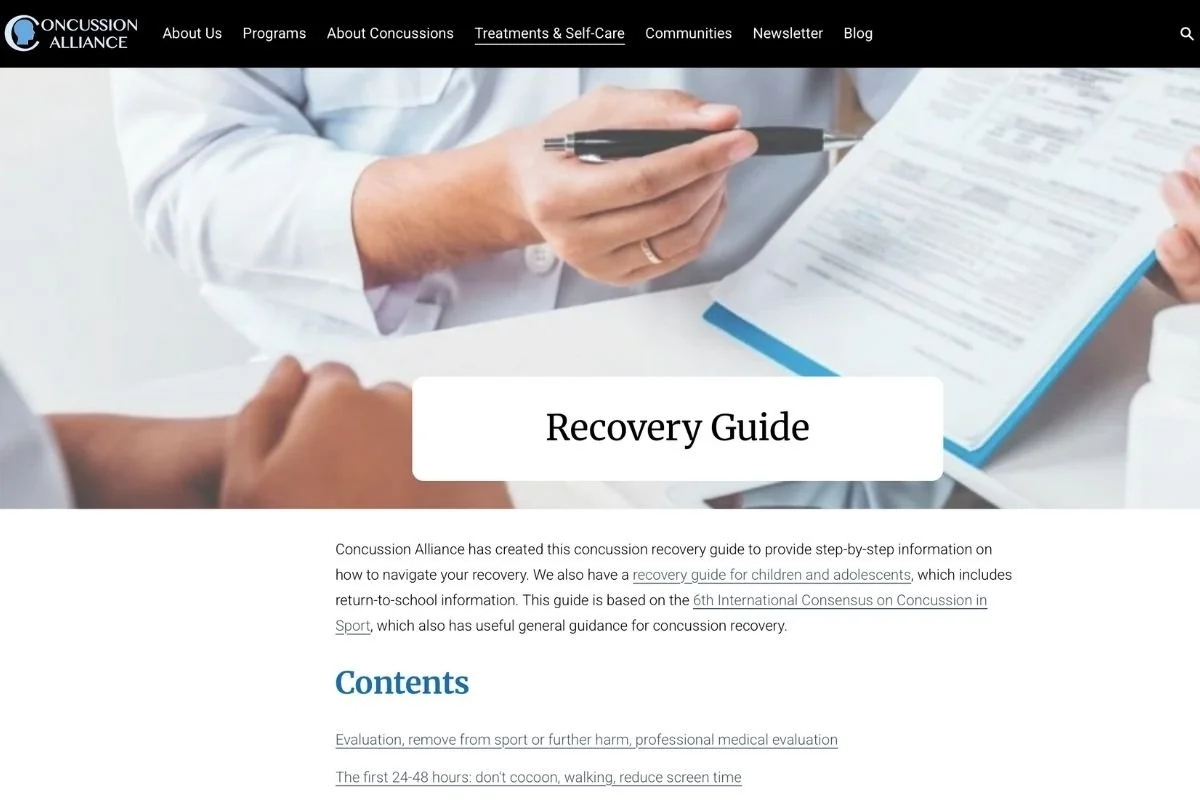
As we begin a new year, we’d like to highlight our Recovery Guide resource. Based on international guidelines, this resource provides step-by-step guidance on how to care for a concussion from the time of the injury through recovery. We also include information about when and how to seek support for persisting symptoms after concussion if needed. Our Recovery Guide for Children and Adolescents gives guidance tailored to children and adolescents, including information on return-to-school protocol. It is primarily based on guidelines for pediatric care created by an international team of experts.
Advocacy
The Sunflower Symbol: Recognizing and supporting people with invisible disabilities
The Sunflower symbol for invisible disabilities is blossoming around the United States and the world, according to a recent article written by Lauren Fetten and published by Being Patient. Designed to be placed on wearable products like pins, wristbands, or lanyards, the Sunflower is a discreet signal that the wearer might need some extra support from staff who have been trained to recognize it. The Hidden Disabilities Sunflower program began in 2016 in London Gatwick Airport and has since been adopted by roughly 125 airports around the U.S. Organizations in several other industries have adopted the Sunflower as well, including transportation companies, grocery stores, and amusement parks. The Sunflower symbol may be useful for concussion patients, especially those experiencing persisting symptoms, as stigma around concussions, persisting symptoms, and other invisible conditions can make it difficult to ask for help.
The Sunflower allows anyone who may need additional support to ask for help in a discreet but flexible way: Employees at organizations that have adopted the Sunflower are trained to ask how they can help without asking about the Sunflower wearer’s disability, and the symbol may also be taken off when the wearer does not need or want extra help. One proponent of the Sunflower program, Jay Reinstein, shared his own experience wearing the Sunflower while travelling. “To be wearing this you don’t have to announce anything,” he said. “You don’t have to say, ‘I have a cognitive issue, I have Alzheimer’s.’ [Employees] see this, and they really want to help. It makes for less stressful travel. Even when I’m traveling with someone, I just feel good about wearing it.”
You can find participating organizations near you on the Hidden Disabilities Sunflower website, which is run by a private company in the U.S. Member organizations receive training on how to implement the program as well as Sunflower products to provide to the public. Products can also be purchased online by individuals. The symbol is used by people of all ages and with a variety of conditions, such as dementia, autism, epilepsy, Parkinson’s, anxiety, traumatic brain injury, post-concussion syndrome, multiple sclerosis, and others. According to the Hidden Disabilities Sunflower website, the sunflower was chosen to be clearly visible from a distance, and to suggest happiness, positivity, strength, growth, and confidence.
Therapies & Diagnostic Tool Under Research
Researchers develop a tool to assess fear avoidance after concussion

Researchers Liam J. Sherwood et al. recently developed the Fear Avoidance after Concussion Tool (FACT), the first validated patient-reported outcome measure for evaluating fear avoidance following concussion. Fear avoidance behavior refers to a patient’s tendency to avoid activities or situations associated with their concussion or exacerbation of their symptoms out of fear, and it is recognized as a risk factor for persisting symptoms after concussion. Published in BMJ Open Sports and Exercise Medicine, FACT includes 28 items that patients rate on a scale of 0 (strongly disagree) to 3 (strongly agree). It has seven subscales (general, physical, psychological, hypervigilance, cognitive, social, work), and takes approximately 3.5 minutes to complete.
The researchers say that early recognition of fear avoidance behavior can allow clinicians to intervene earlier in the treatment process and reduce the risk of persisting symptoms after concussion. “Interventions, such as early education, and targeting psychological drivers of behaviour, have been shown to improve the prognosis of persisting symptoms. These interventions aim to empower the individual to self-manage and control their condition, reducing the negative influence that fear avoidance behaviour may have on recovery.”
Click here to access a copy of FACT itself, provided to us by lead author Liam Sherwood, BSc, MSc.
FACT was developed through a rigorous three-stage process based on COSMIN guidelines (COnsensus-based Standards for the selection of health Measurement INstruments) for content validity. The process involved semi-structured interviews with patients and professionals to generate an initial list of items; review by professionals to ensure relevance, comprehensibility, and comprehensiveness from a professional perspective; and interviews with patients to account for the patient perspective. In the first phase of the tool’s development, seven patients with lived experience of concussion and seven professionals considered experts in concussion management were interviewed to generate a total of 119 initial items. In phase two, 38 international experts were asked to review the items and rate each for relevance and comprehensibility. They were also asked if the overall tool was comprehensive or if additional items were needed. The researchers made revisions based on these responses, and, to ensure the tool met participants’ preference for length, only the top four most relevant items in each domain were included in the final tool. In phase three, ten patients were interviewed to give final feedback on FACT.
Thus, FACT satisfies content validation criteria and balances both patient and professional perspectives. The researchers note that there are a few other important measurement properties that were not evaluated in this study, but are currently being studied. While FACT has met content validity criteria, it still needs to be assessed for construct validity (a measure of whether fear avoidance exists as a consistent characteristic), internal consistency (a measure of how well each item measures fear avoidance), and reliability (a measure of whether the tool consistently produces similar results in similar situations). However, having a content-validated tool for assessing fear avoidance after concussion is an important step towards reducing the risk of persisting symptoms after concussion and supporting patients in their recovery.
Neurodegeneration
P7C3-A20 drug reverses the effects of Alzheimer’s disease in mice
Researchers Kalyani Chaubey et al. recently discovered that the drug P7C3-A20 is able to reverse the brain pathology and cognitive decline of advanced Alzheimer’s disease in mice. Alzheimer’s is the most common type of dementia and is considered irreversible, with current therapies offering limited benefit to patients. P7C3-A20 is a compound that improves neuroplasticity and the brain’s response to disease. In the study, published in Cell Reports Medicine, the researchers administered the drug P7C3-A20 to mice with mid-disease stage Alzheimer’s, the stage in which cognitive impairment emerges, and to mice with advanced stages of Alzheimer’s. For the mid-stage disease mice, P7C3-A20 prevented memory impairment.
Even more notably, in the severe-stage mice, the P7C3-A20 intervention resulted in full cognitive recovery, reduction or reversal of neuropathologies, and “comprehensively restored brain health and function by 12 months.” Dr. Pieper, a senior author of the study, commented, “The key takeaway is a message of hope—the effects of Alzheimer's disease may not be inevitably permanent… The damaged brain can, under some conditions, repair itself and regain function.”
Nicotinamide adenine dinucleotide (NAD+) homeostasis—the balance of NAD+ molecules in the brain—is incredibly important for cellular resistance against numerous brain deteriorations, including DNA damage and neurodegeneration. NAD+ molecules are critical for maintaining the brain’s ability to recover from damage. While NAD+ homeostasis naturally declines with age, the researchers found NAD+ dysregulation correlates with the severity of Alzheimer’s Disease. In the study, the mice bred to develop Alzheimer’s exhibited a 30% reduction in NAD+ homeostasis 6 months into their disease. However, with the P7C3-A20 intervention, their NAD+ homeostasis was restored, which was associated with the reversal of memory and cognitive deficits that had previously been observed.
Along with these results, blood levels of phosphorylated tau 217, a biomarker associated with neurodegeneration similar to that typical of Alzheimer’s, returned to normal levels after the administration of P7C3-A20. The authors note that in humans with Alzheimer’s, there is also decline in NAD+ homeostasis that is correlated with Alzheimer’s pathologies. This study provides a much more hopeful view of Alzheimer’s and neurodegeneration in general, though more research is needed before a medication can be developed for humans.
You Can Support Concussion Patients

Join our community of monthly donors committed to improving how concussions are prevented, managed, and treated, thereby supporting long-term brain health for all. Learn more.
You can also make an impact with a one-time gift or tax-friendly options such as Donor Advised Funds (DAFs), IRA Charitable Rollovers, and Planned Giving: leave a gift in your will. Learn more.