
This article was initially published in the 4/16/26 edition of our Concussion Update newsletter; please consider subscribing.
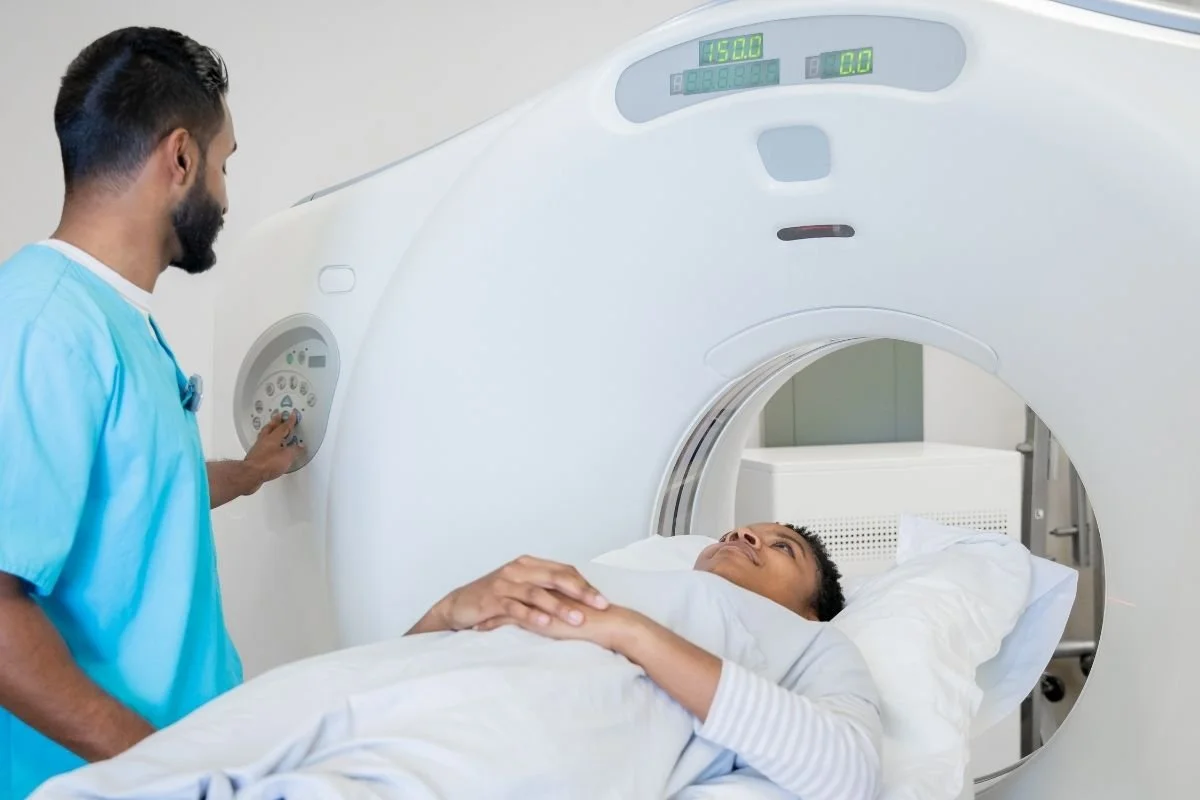
According to an editorial published in Cureus, computed tomography (CT) scans should be an available tool to support mild traumatic brain injury (mTBI) diagnosis, but should not be “the endpoint of thinking.” Currently, there are clinical decision rules, such as the Canadian CT Head Rule, that lay out criteria to help doctors determine when a CT scan is needed. However, the author, So Sakamoto, argues that misunderstanding and misapplication of these rules often lead to the overuse of CT scans without a meaningful improvement in outcomes. Sakamoto notes that “head CT is obtained in >80% of emergency department (ED) evaluations for suspected mTBI,” and CT scans can “quietly become the default response to anxiety: clinician anxiety, patient anxiety, and system anxiety.” To counteract this pattern, he proposes a practical approach: use imaging when it is likely to change injury management, ensure that decision rules are used within their intended limitations, and allow time for additional observation when immediate imaging is unlikely to change injury management. Sakamoto notes that this strategy requires systemic changes, such as supporting and prioritizing robust discharge planning and follow-up. Overall, moving away from rote rule application and towards more intentional use of CT scans within a broader diagnostic strategy can reduce unnecessary CT scanning and improve patient outcomes.
The Canadian CT Head Rule, Sakamoto notes, was created “to identify patients at risk of neurosurgical intervention and clinically important brain injury while safely reducing unnecessary CT use.” It was intended for patients with a “minor head injury” (Glasgow Coma Scale 13-15) who had a loss of consciousness (that was witnessed), amnesia, or disorientation. Misapplication of the rule means that clinicians may incorrectly rule out CT scan use for patients who do not meet those criteria (and thus were never eligible for the rule), or may put too much emphasis on a single criterion (such as age) and scan nearly everyone, even when scans are not necessary. For example, in a UK ED cohort of “fallers” (patients who have taken a fall) aged 65 years or older, 577 of 1172 received CT scans, but only 28 had an intracranial hemorrhage, and only two received neurosurgical intervention. These numbers are not to argue against imaging, but to show what imaging most often does—providing reassurance and stratifying risk more than triggering neurosurgical intervention.
Additionally, Sakamoto notes that in the original development of the Canadian CT Head Rule, patients with bleeding disorders and those using oral anticoagulants were excluded. However, Sakamoto contends that this does not mean patients in those categories must always undergo CT scans, but rather that the rule does not apply, and the decision requires clinician judgment. Thus, Sakamoto argues for a more intentional approach: using time, observation, and robust discharge planning, rather than immediate imaging. This approach, he argues, reduces unnecessary CT scanning while preserving safety.
