Summer Concussion Tools
This article was initially published in the 6/25/26 edition of our Concussion Update newsletter; please consider subscribing.
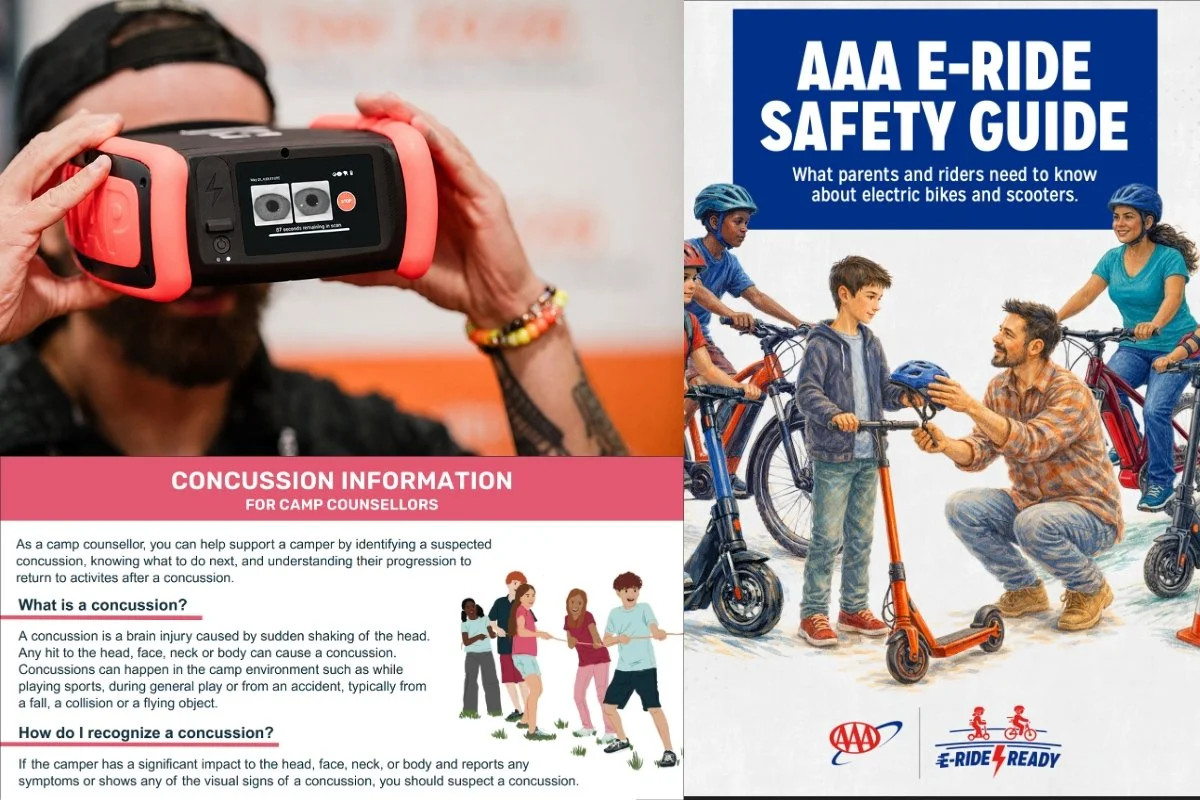
We recommend the E-Ride Safety Guide produced by AAA in May 2026. The guide is part of an initiative to address significant increases in injuries from e-ride devices; an average 23% increase in injuries per year between 2017 to 2022. An article about the initiative in AAA Connect stresses that children are particularly vulnerable because of their limited experience navigating complex traffic environments and the high speeds of these devices. The illustrated E-Ride Safety Guide primarily focuses on parents who purchase e-scooters and e-bikes for their children, as opposed to the micromobility devices availability for short-term rental on the streets of major cities. Topics in the guide include choosing a device and safety features to look for, choosing an appropriate helmet, legal considerations, warnings about deceptively marketed devices, where to ride, how to do a parent-child safety talk, and a family riding agreement.
We recommend a suite of Concussion Resources for Camp Environments produced by PedsConcussion and 360 Concussion Care. The guidelines are evidence-based and up-to-date with the latest international concussion guidelines. The PDF guides include Concussion Information for Camp Counselors; Return to Camp Protocol (for campers), and Return to Camp Work Protocol for Camp Counselors. Also included is a 16-minute recorded webinar Returning to Camp and Working at Camp After a Concussion with researchers Jennifer Dawson PhD, and Nick Reed, PhD.
A new portable device, the SNAP Concussion Test, looks like heavy-duty binoculars and is FDA-cleared as a concussion diagnosis support tool for the clinic and the sports sideline. The healthcare professional inputs the individual’s symptoms (on a scale of 0-6) into SNAP, and then the device tracks eye movements while the individual watches a 90 second video. The device pairs the inputted symptom assessment with the tracked eye movements (typically disrupted by concussion) to produce a SNAP score. This score helps the professional “determine the presence or absence of concussion,” with a 90% sensitivity and 94% specificity. SNAP was developed by Oculogica, the makers of EyeBox, and developed with Department of Defense funding. The company presented abstracts about SNAP at several conferences this spring. For example, Christina L. Master, MD, the Minds Matter Concussion Program Director, was the lead author of the SNAP abstract presented at the American Medical Society for Sports Medicine this April.
