
Cognitive Shuffling may be a promising technique to counter insomnia
By Ella Webster. This article was initially published in the 5/29/25 Edition of our Concussion Update newsletter and republished in the 12/18/25 Edition of our Concussion Update newsletter; please consider subscribing.
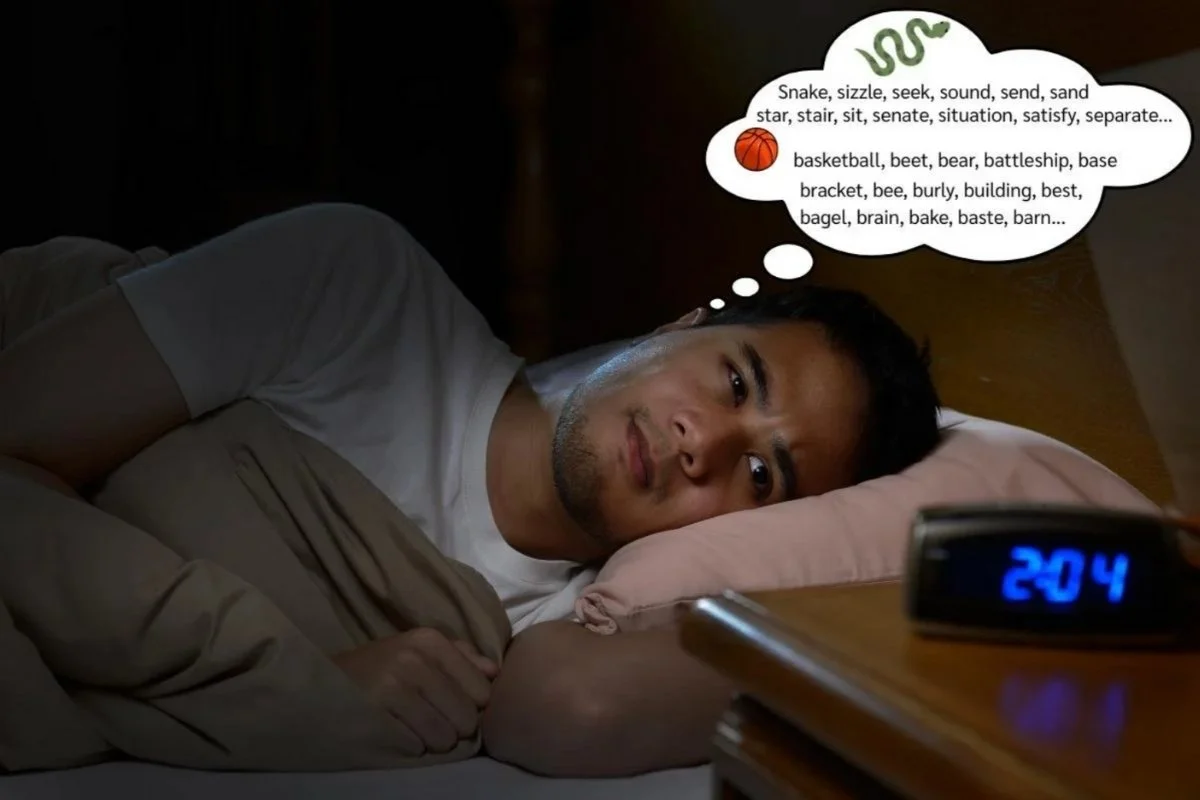
Christina Caron explores a technique called Cognitive Shuffling as a potential tool for those who struggle to fall asleep at night in a 2025 article for The New York Times. This simple technique was created by cognitive scientist Dr. Luc P. Beaudoin over 15 years ago as a solution to his own insomnia. Dr. Beaudoin studied the technique in his lab at Simon Fraser University in Canada and presented his findings at the 2016 Associated Professional Sleep Societies conference in Denver. Cognitive Shuffling revolves around distracting your mind enough to remove thoughts that may keep you up but not so much as to be stimulating.
Previous research has found that when people naturally fall asleep, their minds have several “vivid images or distant thoughts.” Cognitive Shuffling aims to mimic this mental state to trick the brain into falling asleep. Cognitive Shuffling involves mentally coming up with unrelated words. This process begins by choosing a random word, taking a moment to visualize it, and then coming up with another word that starts with the same letter. You repeat this process until you are no longer able to think of words beginning with the same letter. At this point, come up with a new starter word and continue.
For information specific to insomnia related to concussion, including evidence-based methods such as cognitive behavioral therapy for insomnia, see our resources Sleep and Sleep Problems, our blog posts on new research related to concussion and sleep, and the section on sleep in our Self-Care resource.
While this method may be beneficial for some people, currently, there is not enough evidence to support its use as a primary treatment for those suffering from insomnia. That said, there is no harm in trying this method if you are having trouble falling asleep. Clinical psychologist Dr. Shelby Harris recommends that if it isn’t working or you are getting frustrated after roughly 20 minutes, get up and try something else to calm your mind, such as stretching, coloring, or doing a puzzle. With further research, cognitive scientists hope to solidify the methodology and evidence to validate Cognitive Shuffling as a tool for those with insomnia.
