Non-invasive vagus nerve stimulation (nVNS) is associated with improvements in persisting concussion symptoms (12/18/25 Newsletter)
This week, our lead article, Non-invasive vagus nerve stimulation (nVNS) is associated with improvements in persisting concussion symptoms, is in the Therapies Currently Available category.
Do you find the Concussion Update helpful? If so, forward this to a friend and suggest they subscribe.

In this newsletter: Opportunities, Webinar today, Therapies Currently Available, Mental Health, Self-Care
Writers: Zoe Marquis, Ella Webster
Editors: Conor Gormally, Malayka Gormally, & Zoe Marquis
Do you find the Concussion Update helpful? If so, forward this to a friend and suggest they subscribe.
Opportunities
Thursday, December 18 (Today!), 1 pm PT: A remote class, The Body: Friend or Foe? A series of body focused therapeutic sessions, presented by Zena Watson, LCSW, and hosted by Brain Northwest. The class requires a minimum donation of $1 to attend. Register in Advance.
Tuesday, December 23, 2 pm PT: A free 30-minute event, What Works For You During The Holidays? A holiday gathering for the TBI Community, presented by Caterina Turner, M.Ed and hosted by Brain Northwest. Register in advance.
Register now for remote classes starting in January: Free, six-weekMindset Programs, focusing on yoga, mindfulness, & education. Hosted by LoveYourBrain.
Webinar Today
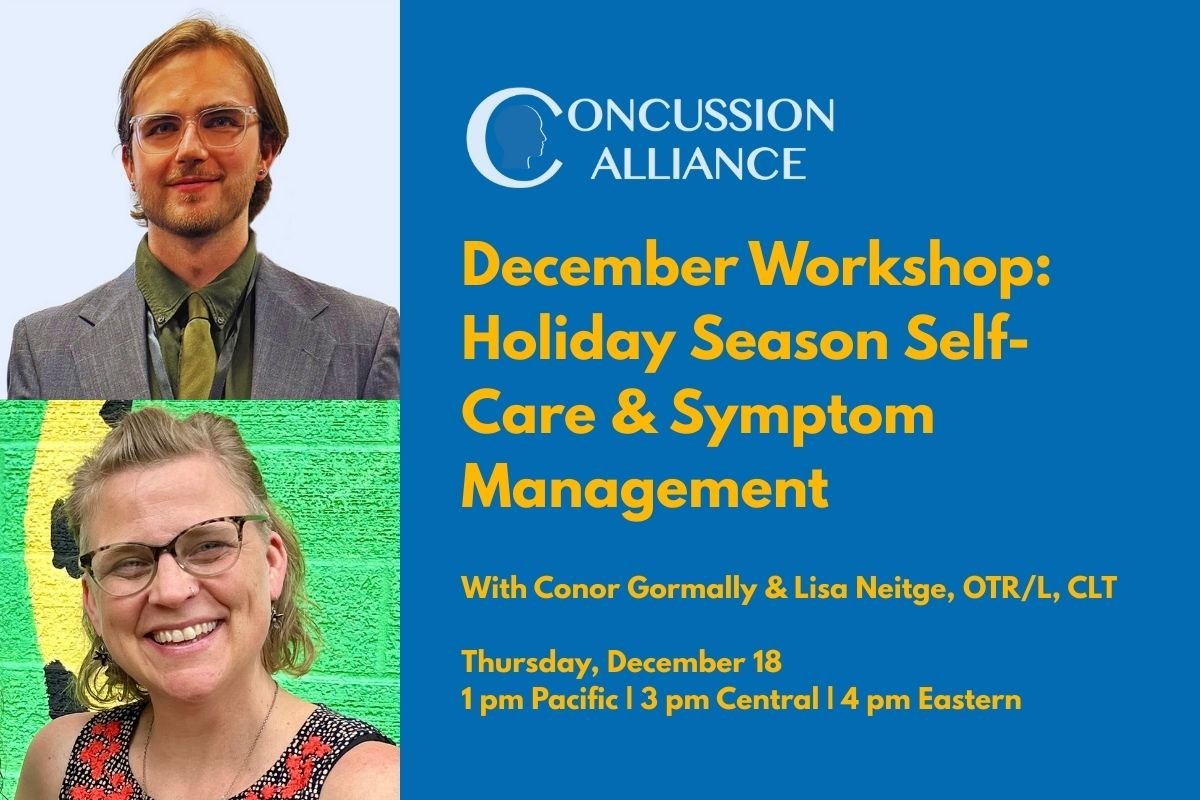
We’re hosting another workshop! Please join us on Thursday, December 18, at 1 pm Pacific | 3 pm Central | 4 pm Eastern for our workshop Holiday Season Self-Care & Symptom Management. This workshop will cover common triggers for concussion symptoms during the holiday season, strategies for self-care and symptom management, and how advocates can best support patients.
The webinar will be hosted by Concussion Alliance CEO Conor Gormally, who will speak about their personal experience managing acute & persisting symptoms during the holiday season. We'll also be joined by Occupational Therapist and concussion specialist Lisa Neitge!
Register in advance for this webinar:
https://us02web.zoom.us/webinar/register/WN_IOQ9HY8gT--kzZTMRJ10mg
After registering, you will receive a confirmation email containing information about joining the webinar.
Therapies Currently Available
Non-invasive vagus nerve stimulation (nVNS) is associated with improvements in persisting concussion symptoms
A study published in Frontiers in Neurology found that non-invasive vagus nerve stimulation (nVNS) is associated with improvements in persisting concussion symptoms across cognitive, affective (mood), somatic (physical), and vestibular (balance) domains. Researchers Michael Ament et al. assembled data from 102 patient records in which patients were prescribed nVNS for post-concussion symptoms and completed both a baseline and a follow-up assessment of their symptoms (using the Neurobehavioral Symptom Inventory, or NSI). These were patients with long-lasting persisting concussion symptoms; the patients’ average time from their concussion to the start of nVNS treatment was almost half a year, and for 11% of the group, more than one year. At the beginning of their treatment, patients were taught to use the nVNS medical device (gammaCore™) and instructed to perform 2-minute stimulations twice in the morning and twice in the evening, as well as any time they felt symptomatic. Follow-up assessments were given approximately 3 months after treatment initiation.
The researchers found that nVNS was associated with significant improvement in 16 of 22 symptom domains in the NSI, including post-traumatic headache, difficulty concentrating, dizziness, and depression. Notably, the length of time between injury and treatment did not affect the magnitude of improvement. The researchers say that “the ease of administration, favorable tolerability profile, and multi-symptom efficacy of nVNS represent meaningful advantages in the management of mTBI, a condition with few targeted treatment options.”
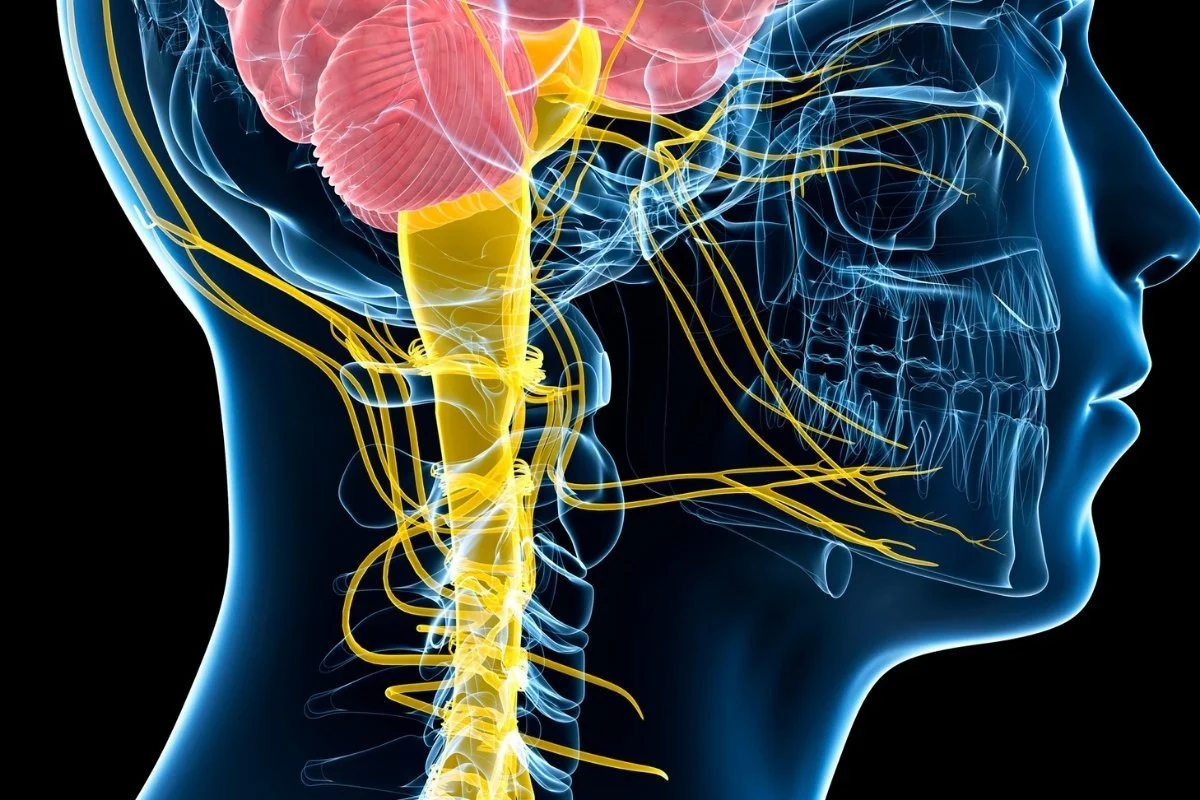
Although the neurological processes responsible for the observed improvement are not fully understood, the researchers say that stimulation of the cervical vagus nerve activates parts of the central nervous system that regulate inflammation, helping stabilize dysregulated pathways in the brain most affected by injury. The authors also note a couple of limitations of the study: the retrospective design means that causal relationships cannot be established, and the lack of a control group means that the placebo effect is possible. The researchers attempted to compare the data with data from a group of patients who were not prescribed nVNS, but their baseline symptom levels were different enough to preclude comparison. However, no device-related adverse events or side effects were reported during treatment, which is promising for treatment implementation. The researchers say that “the absence of systemic side effects and the device’s non-invasive nature make it particularly attractive for use in sensitive populations, including those with comorbid psychiatric or autonomic dysregulation.”
The device used in the study, gammaCore™ (by electroCore, Inc.), is available with a prescription from your healthcare provider. Concussion Alliance has no financial connection with electroCore.
Mental Health
Post-concussion symptom severity phenotypes predict risk of depression after concussion in adults
A recent study published in BMC Psychiatry found that post-concussion symptom severity, injury severity, and psychological resilience can predict the risk of post-concussion depression in adults. Using 249 patient responses to the Rivermead Post-Concussion Questionnaire, Researchers Hung-Ju Chen et al. identified three statistically distinct clusters (or “phenotypes”) of symptom severity: mild, moderate, and severe. The researchers then used these phenotypes (as well as a measure of participants’ psychological resilience and their Glasgow Coma Scale score at time of injury) to build a model that predicted post-concussion depression. The model showed that participants in the “moderate” cluster were 5 times more likely to experience post-concussion depression than those in the “mild” cluster, and participants in the “severe” cluster were 17 times more likely to experience post-concussion depression than those in the “mild” cluster. Higher Glasgow Coma Scale and resilience scores were protective factors, meaning that they reduced the risk of post-concussion depression.
Overall, the model was able to correctly discriminate between patients who developed post-concussion depression and those who did not 88% of the time, which is excellent for this kind of model. These findings provide a way to identify patients with a higher risk of post-concussion depression, allowing for targeted intervention and helping focus the limited resources available for mental health care where they are needed most. The authors recommend that clinicians “integrate both symptom severity clustering and resilience assessments into routine post-mTBI evaluation.”
The researchers collected data from 249 adults who had been diagnosed with a concussion in the past six months. They assessed participants’ depression levels, resilience, and symptom severity using existing assessment tools. They also recorded participants’ documented Glasgow Coma Scale score at the time of their injury. Patients with prior depression or a history of psychological hospitalization were excluded. Interestingly, the researchers found that patients in the “severe” symptom cluster experienced vision disturbances (such as light sensitivity and double vision) more often than patients in the mild and moderate clusters; They also had the greatest headache burden. The researchers suggest that screening for these symptoms early may help identify patients with the greatest risk for secondary depression, allowing for timely assessment and interventions. The researchers note that their study is limited in its generalizability due to being conducted at a single hospital in Taiwan. Specifically, they mention that attitudes towards mental health, as well as available support structures, differ by region. The researchers also note that stigma towards mental health may have influenced self-reports for the depression and resilience assessments.
Self-Care: From the Archives
Cognitive Shuffling may be a promising technique to counter insomnia
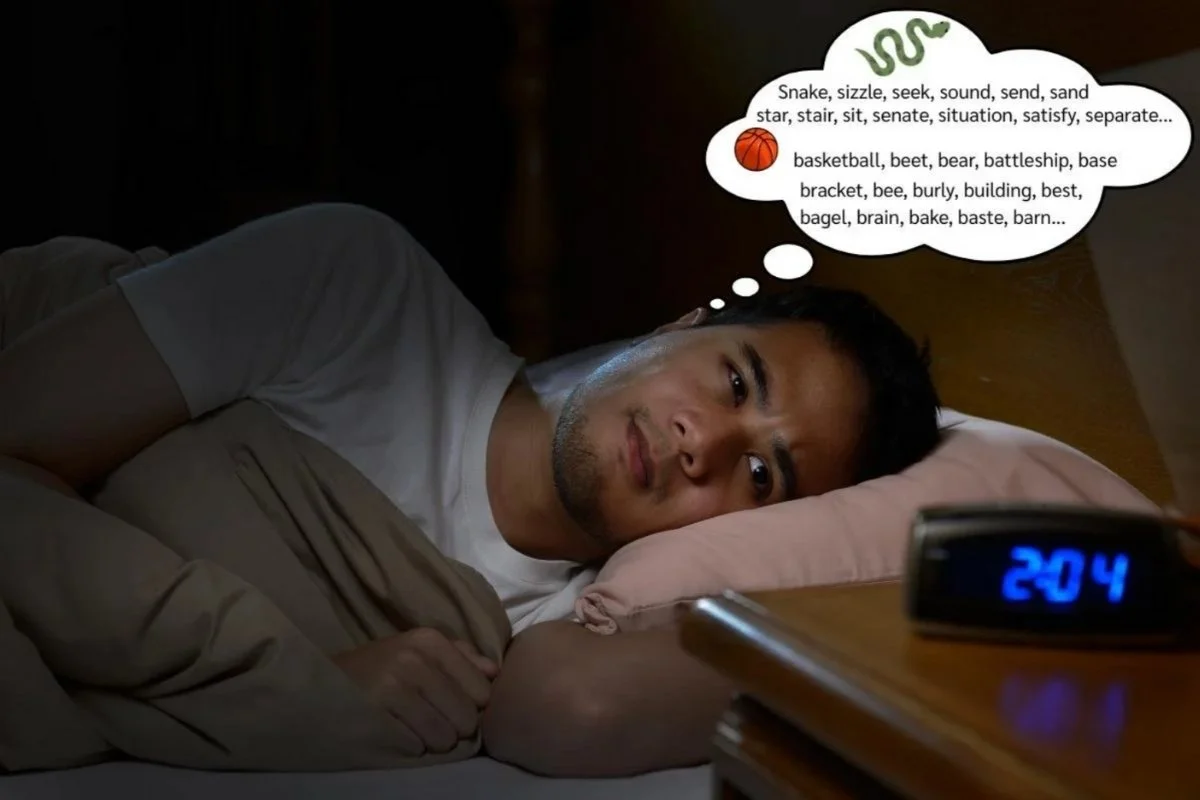
Christina Caron explores a technique called Cognitive Shuffling as a potential tool for those who struggle to fall asleep at night in a 2025 article for The New York Times. This simple technique was created by cognitive scientist Dr. Luc P. Beaudoin over 15 years ago as a solution to his own insomnia. Dr. Beaudoin studied the technique in his lab at Simon Fraser University in Canada and presented his findings at the 2016 Associated Professional Sleep Societies conference in Denver. Cognitive Shuffling revolves around distracting your mind enough to remove thoughts that may keep you up but not so much as to be stimulating.
Previous research has found that when people naturally fall asleep, their minds have several “vivid images or distant thoughts.” Cognitive Shuffling aims to mimic this mental state to trick the brain into falling asleep. Cognitive Shuffling involves mentally coming up with unrelated words. This process begins by choosing a random word, taking a moment to visualize it, and then coming up with another word that starts with the same letter. You repeat this process until you are no longer able to think of words beginning with the same letter. At this point, come up with a new starter word and continue.
For information specific to insomnia related to concussion, including evidence-based methods such as cognitive behavioral therapy for insomnia, see our resources Sleep and Sleep Problems, our blog posts on new research related to concussion and sleep, and the section on sleep in our Self-Care resource.
While this method may be beneficial for some people, currently, there is not enough evidence to support its use as a primary treatment for those suffering from insomnia. That said, there is no harm in trying this method if you are having trouble falling asleep. Clinical psychologist Dr. Shelby Harris recommends that if it isn’t working or you are getting frustrated after roughly 20 minutes, get up and try something else to calm your mind, such as stretching, coloring, or doing a puzzle. With further research, cognitive scientists hope to solidify the methodology and evidence to validate Cognitive Shuffling as a tool for those with insomnia.
You Can Support Concussion Patients

Join our community of monthly donors committed to improving how concussions are prevented, managed, and treated, thereby supporting long-term brain health for all. Learn more.
You can also make an impact with a one-time gift or tax-friendly options such as Donor Advised Funds (DAFs), IRA Charitable Rollovers, and Planned Giving: leave a gift in your will. Learn more.