Near-infrared light therapy improves cognition (12/11/25 Newsletter)
This week, our lead article, Significant cognitive function improvements after at-home transcranial photobiomodulation (light therapy) for those exposed to repetitive head acceleration events is in the Therapies Currently Available category.
Do you find the Concussion Update helpful? If so, forward this to a friend and suggest they subscribe.
In this newsletter: Opportunities, Upcoming Webinar, Therapies Currently Available, Education, and CTE & Neurodegeneration
Writers: Malayka Gormally, Zoe Marquis, and Emily Sugg
Editors: Conor Gormally, Malayka Gormally, & Zoe Marquis
Do you find the Concussion Update helpful? If so, forward this to a friend and suggest they subscribe.
Opportunities

Friday, December 12, 8 am PT: A free webinar, Youth Traumatic Brain Injury and the Law: Barriers to Participation and Justice, will be presented by Catherine Wiseman-Hakes, SLP, PhD, and Joseph Wszalek, JD, PhD. Hosted by The Center on Brain Injury Research and Training; Register in advance.
Register now for remote classes starting in January: Free Mindset Programs, focusing on yoga, mindfulness, & education. These six-week programs on Zoom are for people with brain injury and caregivers. Choose between Group Discussion and Yoga & Discussion, hosted by LoveYourBrain.
Upcoming Webinar
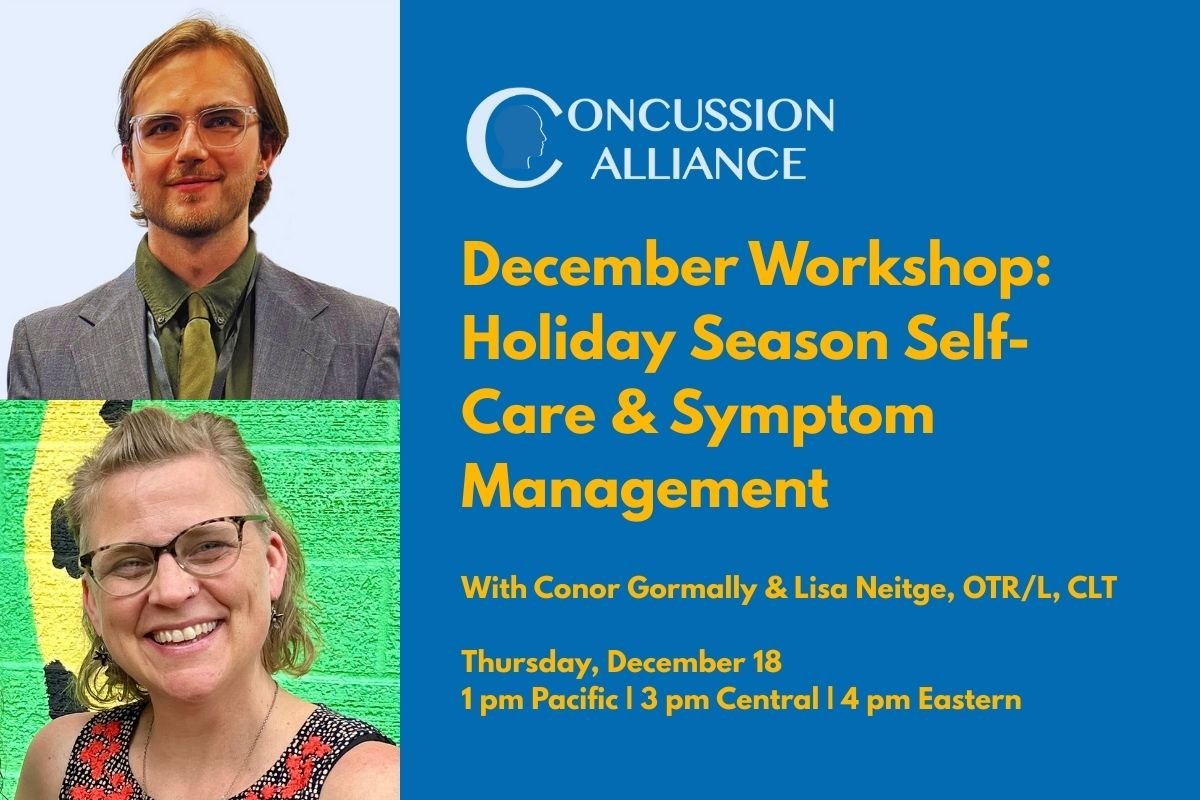
We’re hosting another workshop! Please join us on Thursday, December 18, at 1 pm Pacific | 3 pm Central | 4 pm Eastern for our workshop Holiday Season Self-Care & Symptom Management. This workshop will cover common triggers for concussion symptoms during the holiday season, strategies for self-care and symptom management, and how advocates can best support patients.
The webinar will be hosted by Concussion Alliance CEO Conor Gormally, who will speak about their personal experience managing acute & persisting symptoms during the holiday season. We'll also be joined by Occupational Therapist and concussion specialist Lisa Neitge!
Register in advance for this webinar:
https://us02web.zoom.us/webinar/register/WN_IOQ9HY8gT--kzZTMRJ10mg
After registering, you will receive a confirmation email containing information about joining the webinar.
Therapies Currently Available
Significant cognitive function improvements after at-home transcranial photobiomodulation (light therapy) for those exposed to repetitive head acceleration events
A “proof-of-concept” study found that 8-10 weeks of at-home treatment with a transcranial photobiomodulation (tPBM) device resulted in statistically significant improvements in cognitive function in adults exposed to repetitive head acceleration events (RHAE). Similar results have been demonstrated in case studies, many of which we have covered (a hockey player, four retired football players, and earlier pilot studies). The study by Spencer W. Liebel et al. is one of the largest tPBM studies focusing on traumatic brain injury (44 participants), and one of the first to focus specifically on RHAE, which includes exposure to a broader group of injury mechanisms that repetitive head impacts (RHI), such as whiplash, personal violence, and military blast exposure.
Published in Photobiomodulation, Photomedicine, and Laser Surgery, the authors explain that “PBM is thought to reduce inflammation of brain tissue and encourage neuronal proliferation.” This study found that tPBM stimulated neuroplasticity in specific areas of cognition that are “commonly affected by neurotrauma” and that are vulnerable to neurodegeneration. To learn more about PBM, we recommend watching this recent ABC News interview with a former football player and leading PBM researcher, Dr. Margaret Naeser.
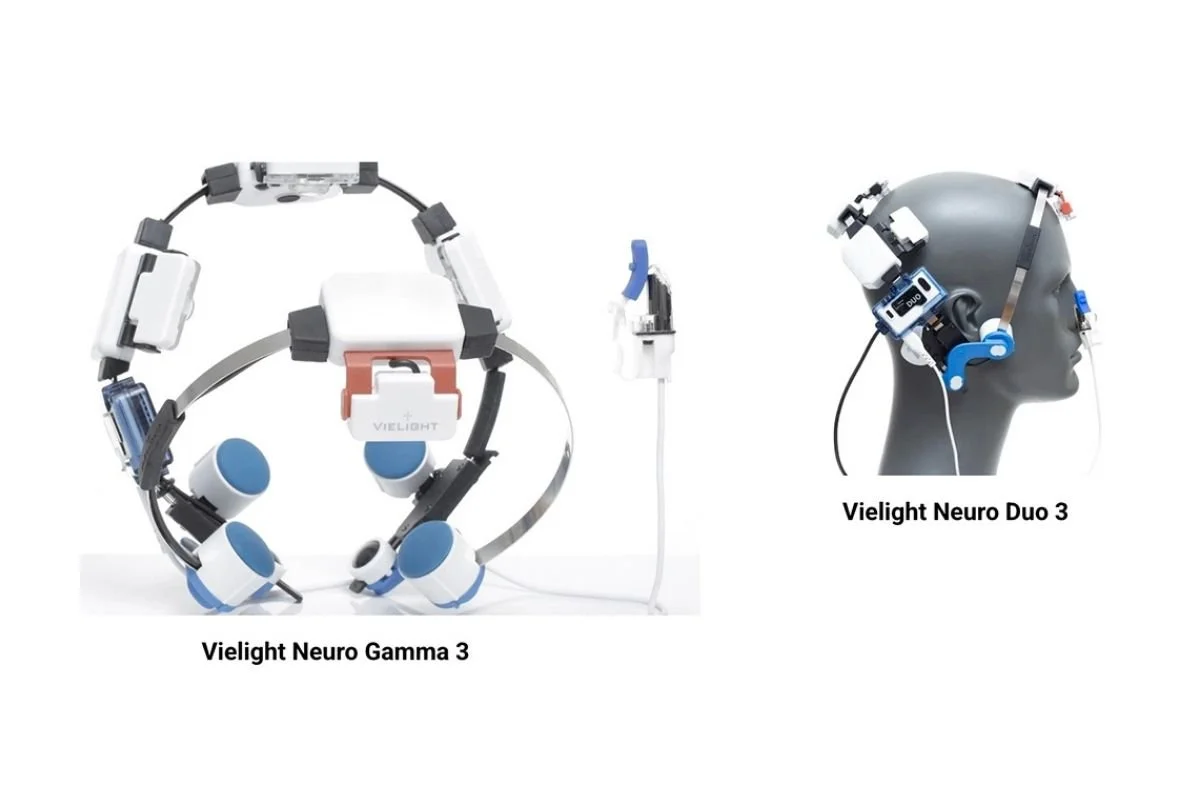
The study at the University of Utah involved 44 participants with a self-reported history of RHAE. Participants had experienced a median of 6 TBIs and 12 years of RHAEs, and they had no history of psychiatric disorders or neurological disease. They were given a battery of cognitive tests before and after the tPBM treatments: verbal memory and learning, executive function, attention, and inhibitory control and fluid cognition (“the ability to solve novel problems, reason abstractly, and adapt to changing situations without relying on prior knowledge.”) Participants were given a tPBM device (a Vielight Neuro Gamma 3), worn on the head, that delivers pulses of light at particular wavelengths. Specifically, the Neuro Gamma 3 delivers near-infrared light at 810 nanometers, pulsed at 40 hertz, through 4 transcranial LED lights and one intranasal (in the nose) LED light. Participants were instructed to use the device for 20 minutes every other day for 8-10 weeks.
Vielight devices are available for purchase on their website, and no prescription is needed; the current equivalent device is the Neuro Gamma 4. (Concussion Alliance has no financial connection with Vielight.)
After the intervention, at the group level, statistically significant increases with moderate to large effect sizes were found in “fluid cognition, processing speed, learning and memory, attention, working memory, and certain aspects of executive function.” On the individual level, the changes were smaller, as “0–36% of participants showed reliable improvement across cognitive measures, depending on the subtest.” The researchers note that several factors may influence this finding, including test-retest reliability, and they state that the findings on the individual level “should not diminish the promising improvements seen at the group level in these early studies of PBM.”
While this study did not examine whether these improvements held over time, the researchers are still following this group of participants and expect to publish in the future on the longer-term effects of this tPBM intervention. This was not a clinical trial; there was no control group given sham devices, and the authors recommend such a trial. Additional limitations include the lack of diversity among participants (primarily white males), varying exposures to RHAE, self-reported RHAE history, and limited group size.
Education
New Clinical Practice Guideline: Recommendations for primary care doctors treating adults with mTBI

Outpatient TBI care is highly variable, and many patients do not receive the care they need. In fact, according to one study, only 42% of mild TBI patients report receiving educational material at discharge from the emergency department, and only 52% of patients experiencing postconcussive symptoms report having seen a practitioner within 3 months following injury. To address this problem, a new Clinical Practice Guideline (CPG) on traumatic brain injury care was recently published in the Journal of Neurotrauma.
Written by Noah D. Silverberg et al., the guideline is meant for primary care providers treating adults with traumatic brain injury (TBI) who require brief or no hospital care; this includes a range of TBIs, including concussions. Clinical Practice Guidelines (CPGs) have been developed for the acute management of severe traumatic brain injury (TBI) as well as for mild TBI (concussion) in children, sport, and military settings. However, this is the first guideline that applies to adults with TBI who have been discharged after going to the emergency department (or urgent care), who were not hospitalized, or who went directly to their primary care provider.
The CPG includes 11 recommendations:
(1) confirm the diagnosis;
(2) determine whether emergency department evaluation is required;
(3) request neuroimaging and neuropsychological assessment when indicated;
(4) screen for social determinants of health;
(5) provide guidance on return to usual activities;
(6) educate the patient and family;
(7) assess for risk of persistent symptoms;
(8) prioritize which symptoms to target first;
(9) initiate treatment for posttraumatic headache;
(10) screen and initiate treatment for mental health disorders; and
(11) decide if and when to refer to specialty care.
These recommendations are meant to reduce variability in post-acute outpatient TBI care.
Notably, the guidelines include updated information about returning to activities, recommending relative rest for up to two days after injury, followed by a gradual return to activities as symptoms allow. This recommendation is an important step towards putting the most up-to-date information into practice. The guidelines also recommend considering risk factors for persisting symptoms—such as social determinants of health, burden of post-concussion symptoms, and mental health symptoms—and beginning treatment for post-traumatic headache. These steps can make a huge difference for patients experiencing (or at risk of experiencing) persisting symptoms.
The CPG was developed as part of an action collaborative under the auspices of the National Academies of Sciences, Engineering, and Medicine. The bulk of the evaluation and synthesis was completed by a core working group, but health professionals and brain injury organizations, as well as individuals with lived experience with TBI, were involved in key steps. The working group carried out a rigorous process including identifying and evaluating existing guidelines, conducting a survey of clinicians and people with lived experience to prioritize topics, synthesizing existing guidelines into recommendations based on prioritized topics, external review by health professional and brain injury organizations, and revisions. Recommendations are rated as “strong for or against,” “weak for or against,” or “good practice,” in order of descending strength of evidence. The group notes that further research is needed into “weak for or against” and “good practice” recommendations.
CTE and Neurodegeneration
Neuron inflammation and loss is correlated with years of repetitive head impacts, increasing susceptibility to CTE in former contact sports athletes under age 51
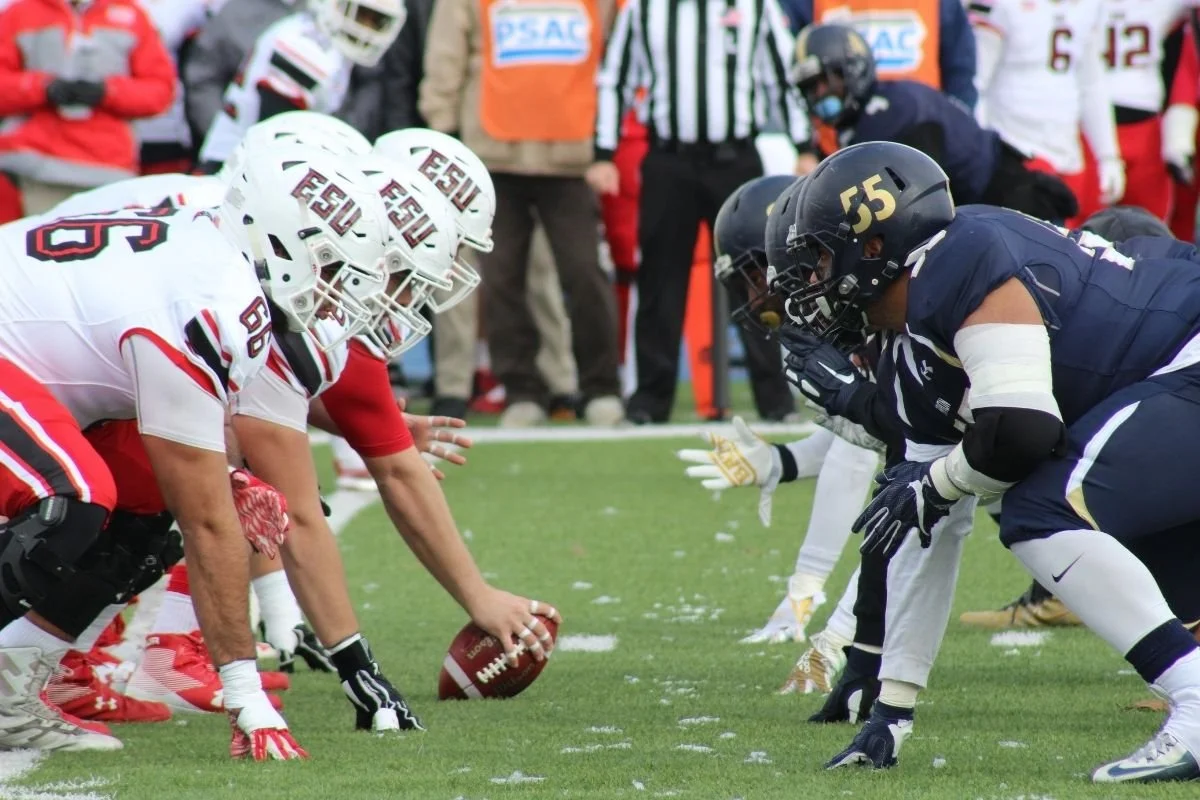
A recent study published in Nature found that multiple years of repetitive head impacts (RHIs) can cause changes in the brain at the cellular level that precede and may underlie clustering of hyperphosphorylated tau protein (p-tau), a key marker of chronic traumatic encephalopathy (CTE). CTE is a progressive brain disorder resulting from repeated head trauma, including RHIs. This study, based on donated brain tissue, found that these brain changes correlated with the number of years that study participants had played contact sports.
Authors Morgane Butler et al. surmise that these changes may also help explain early symptoms and development of the disease that are not fully explained by p-tau clustering. Gaining insight into how these changes in the brain unfold, especially how to identify them earlier in life, will enable professionals to study disease progression more effectively. This knowledge will also allow clinicians to better understand structural brain changes in contact sport athletes, investigate prevention strategies, and improve timely intervention.
Dr. Morgane Butler and her colleagues from Boston University Chobanian & Avedisian School of Medicine used single-nucleus RNA sequencing on donated brain tissue to observe differences in gene expression between individuals with different amounts of exposure to RHIs: a control group with no history of contact sports, 8 American football and soccer players with no history of a CTE diagnosis but who had been exposed to RHI throughout their sporting career, and 11 contact sport athletes with low-stage CTE (Stage 1 or 2 CTE, which have much milder pathology than stages 3 or 4). They found that people exposed to RHI had an average of 56% fewer excitatory neurons in the brain sulci – the folds of the brain that take the most force during a head impact. In addition, the researchers identified markers of inflammation related to microglia and endothelial cells, astrocyte cell death, and altered gene expression. Some individuals in their RHI sample had no signs of tau protein clustering, suggesting that neural damage may start much earlier than CTE. As CTE advances, increasing tau clustering makes the loss of brain cells even more severe.
This study is the first to analyze brain changes from exposure to repeated head trauma in a younger (under age 51) population. A limitation is that the study only samples a small area of brain tissue. CTE is typically a “patchy disease,” meaning that sampling could have missed important cellular responses in other regions. With that being said, these findings support that RHI causes brain damage in people under age 51 that is identifiable before the development of p-tau clusters that are characteristic of CTE.
You Can Support Concussion Patients

Join our community of monthly donors committed to improving how concussions are prevented, managed, and treated, thereby supporting long-term brain health for all. Learn more.
You can also make an impact with a one-time gift or tax-friendly options such as Donor Advised Funds (DAFs), IRA Charitable Rollovers, and Planned Giving: leave a gift in your will. Learn more.