
Acupuncture after concussion reduces symptoms and improves white matter integrity
By Emily Sugg. This article was initially published in the 9/25/25 Edition of our Concussion Update newsletter; please consider subscribing.
A group of researchers at Xi'an Jiaotong University found that four weeks of acupuncture, starting a week after a concussion, reduced concussion symptoms and improved brain tissue (white matter) integrity. Dr. Wang and colleagues followed 66 patients with mild traumatic brain injury (mTBI) to better understand acupuncture's effectiveness as a treatment option for this population. Published in Radiology, this study provides compelling evidence that receiving acupuncture was associated with greater improvements in concussion symptoms and healthier white matter fibers than a sham control treatment. This study contributes to a growing body of research that reflects an increased interest in nonpharmacological (non-medication) treatments in the world of mTBI.
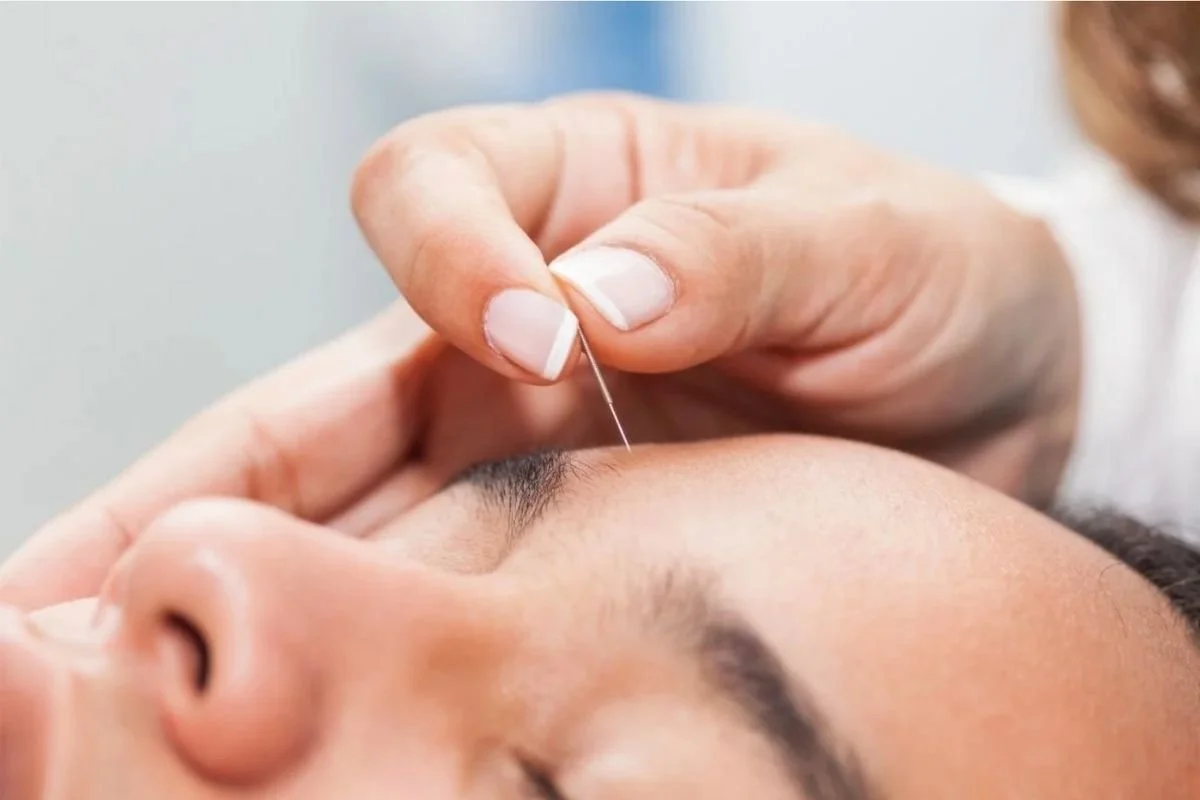
The researchers split study participants into three groups (sham acupuncture, true acupuncture, and no acupuncture) following a baseline assessment seven days after the participants visited an emergency department for a concussion. The true and sham acupuncture groups used stainless steel disposable needles inserted into six acupuncture points on the front and back of the participants. True acupuncture participants had needles placed in traditional acupuncture points, combined with additional electrical stimulation through the needles for 30 minutes. The sham group's needles were placed in non-acupuncture points (locations on the body not recognized for having traditional acupuncture effects) and only experienced the initial stimulation of the insertion poke of the needle, with a fake stimulation indicated by a light going off, despite not receiving any electricity from the needles.
The authors utilized DTI, an advanced type of MRI imaging used to measure the connections between different brain areas, to analyze detailed images of the participants' white matter following acupuncture therapy. These scans revealed a significant improvement in white matter integrity following true acupuncture, whereas sham acupuncture and the control group showed no improvement in their imaging. The researchers also observed improvements in the participants' self-reported symptoms and long-term recovery, as measured by the self-report Rivermead Post-Concussion Symptoms Questionnaire (RPQ-16). Participants filled out the RPQ-16 during their baseline assessment, immediately after the four weeks of acupuncture, and at a follow-up assessment 6-12 months later. The RPQ-16 is a commonly used concussion symptom index, comprising 16 questions about symptoms and whether the patient has experienced any within the past 24 hours. This self-report data indicated that the true acupuncture group was the only group to report a significant drop in concussion symptoms.
The correlation between the structural changes shown in the DTI and the self-reported results of the RPQ-16 highlights how acupuncture can be a nonpharmacologic option for the treatment of concussion symptoms. According to Dr. Wang and colleagues, this study is one of the first experiments to utilize neuroimaging to compare the effects of true acupuncture, sham acupuncture, and a control group in patients with mTBI. However, the study did not utilize imaging during the participants' 6-to 12-month follow-up. In the future, the research group wants to track their patients beyond one year to evaluate the durability of the treatment's benefits. They are hoping to test this theory on a broader spectrum of mTBIs to better understand acupuncture's efficacy as a treatment. Overall, they hope to further highlight non-invasive treatments for concussion symptoms and brain health after mTBI.